2024-03-16
Creation of Tactile
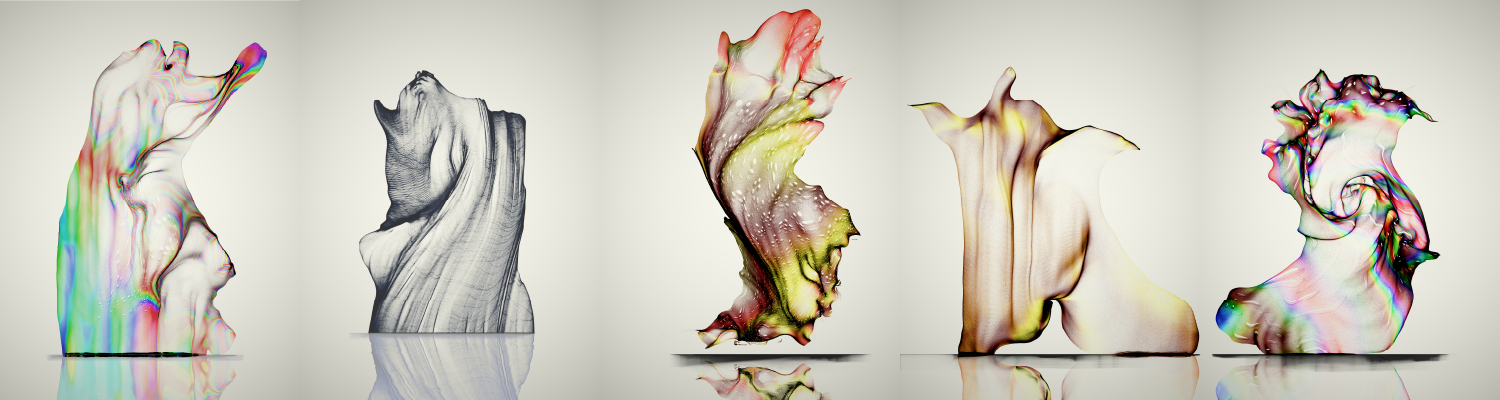
In "Tactile," I embarked on a captivating exploration of generative art, delving into the creation of surfaces and forms that evoke a sense of tangible reality while simultaneously embracing the realm of the unfamiliar and unexpected. My goal was to push the boundaries of representational art by creating something that simultaneously feels familiar and provokes a sense of wonder and intrigue.
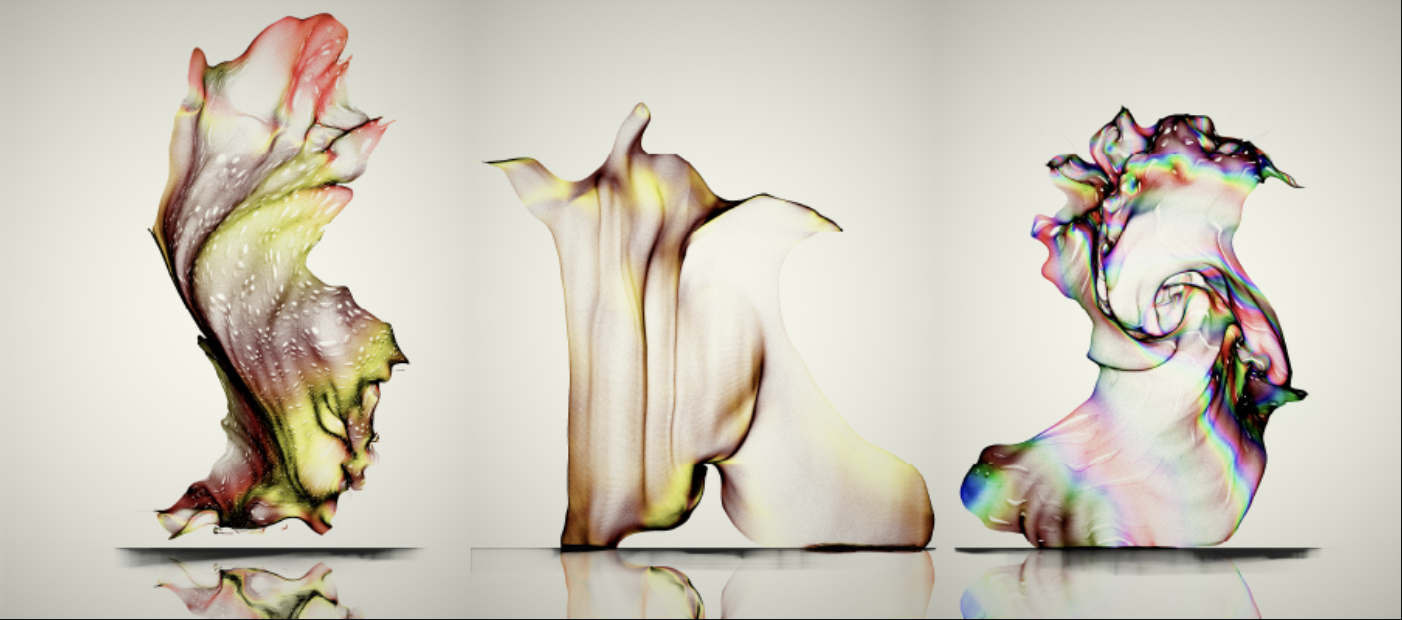
In "Tactile," I embarked on a captivating exploration of generative art, delving into the creation of surfaces and forms that evoke a sense of tangible reality while simultaneously embracing the realm of the unfamiliar and unexpected. My goal was to push the boundaries of representational art by creating something that simultaneously feels familiar and provokes a sense of wonder and intrigue.
Drawing inspiration from the diverse textures and forms found in the natural world, I meticulously crafted a series of intricate digital objects. Each piece is a carefully constructed composition of interconnected elements, arranged in a way that suggests a cohesive, three-dimensional space. By employing advanced algorithms and computational techniques, I aimed to capture the subtle nuances and organic irregularities that characterize tactile surfaces.
Central to my creative process was the exploration of materiality and the illusion of physical presence. I experimented with various shading techniques, lighting effects, and textural overlays to create a sense of depth and realism. The result is a collection of images that appear almost tangible, inviting the viewer to imagine the weight, texture, and temperature of the depicted surfaces.
However, I did not limit myself to replicating existing materials. Instead, I embraced the freedom and boundless possibilities offered by the digital medium to create entirely new and fantastical forms. By combining familiar elements in unexpected ways, I aimed to evoke a sense of cognitive dissonance—a feeling that something is both familiar and strange at the same time.
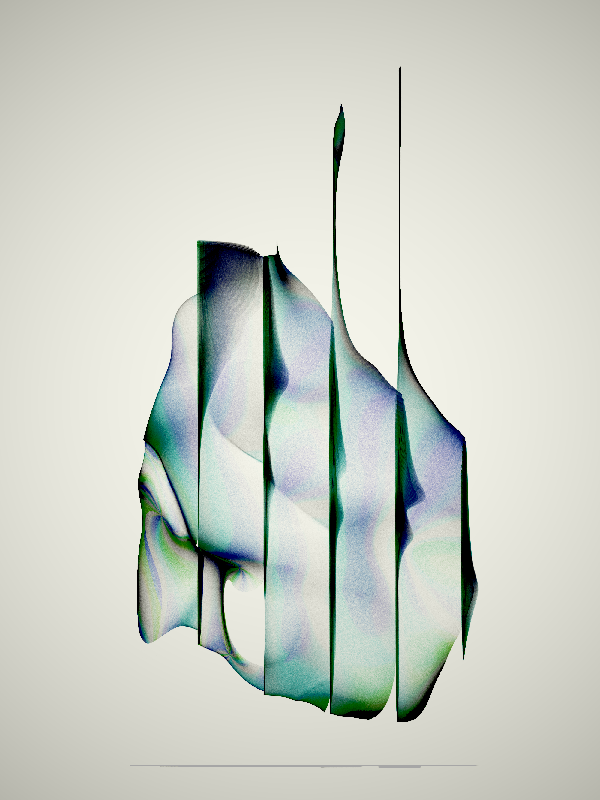
Through this project, I sought to challenge traditional notions of representation and explore the potential of generative art to create immersive and thought-provoking visual experiences. "Tactile" represents a fusion of art and technology, where the physical and the virtual converge to create a unique aesthetic that invites viewers to engage with the work on a deeper level.
In a simulated environment, we create particles that move and interact like real particles. They come together to form basic shapes, like the coalescence of matter in the real world. We use computational techniques like particle systems to simulate their behavior and interactions. The movement of particles is governed by factors like mass, velocity, and acceleration. As they interact, particles may coalesce into larger structures. Factors like particle size, density, and interaction strength influence this process. This ability to create and manipulate particles provides a valuable tool for studying various phenomena and creating interactive virtual environments.
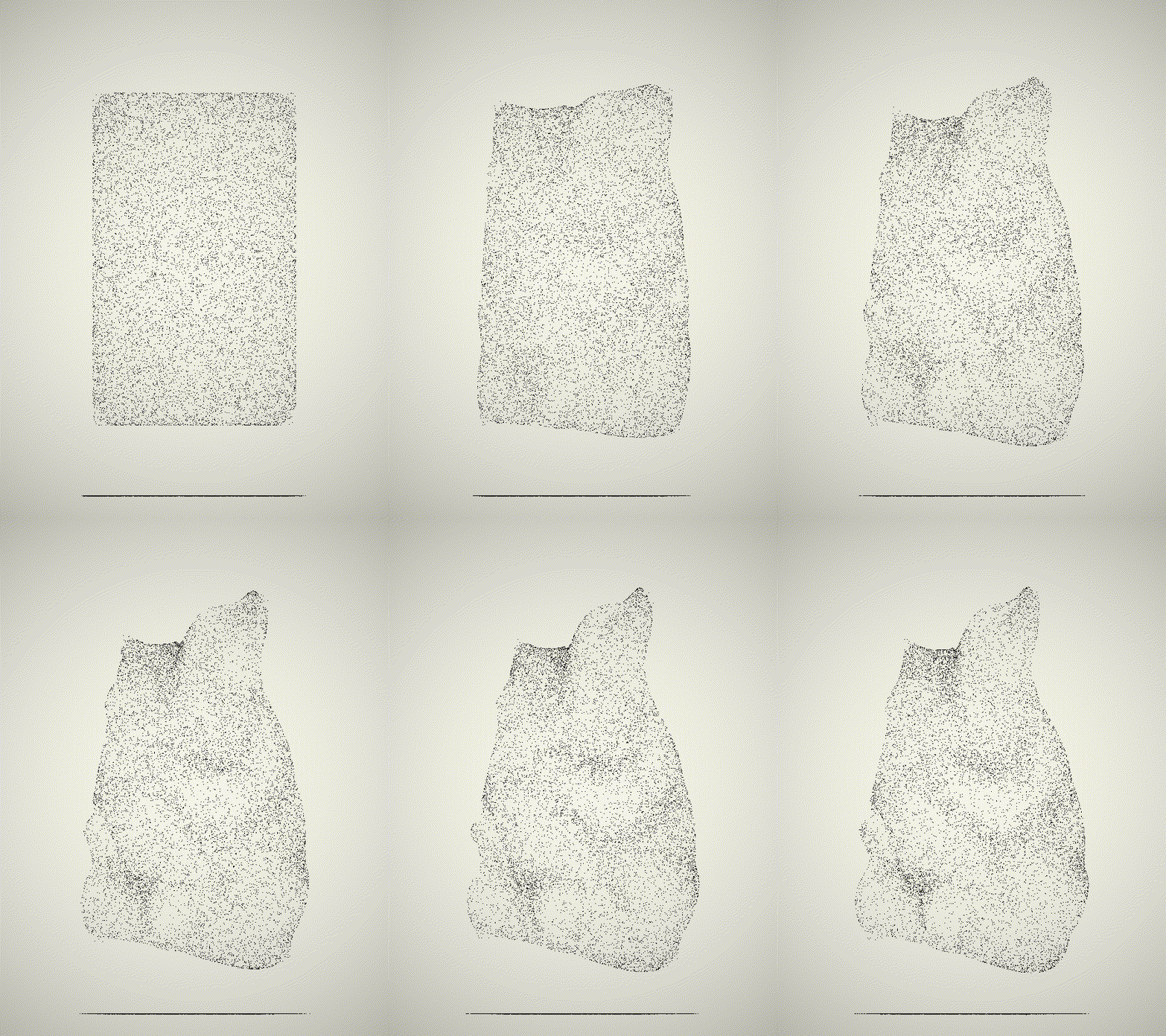
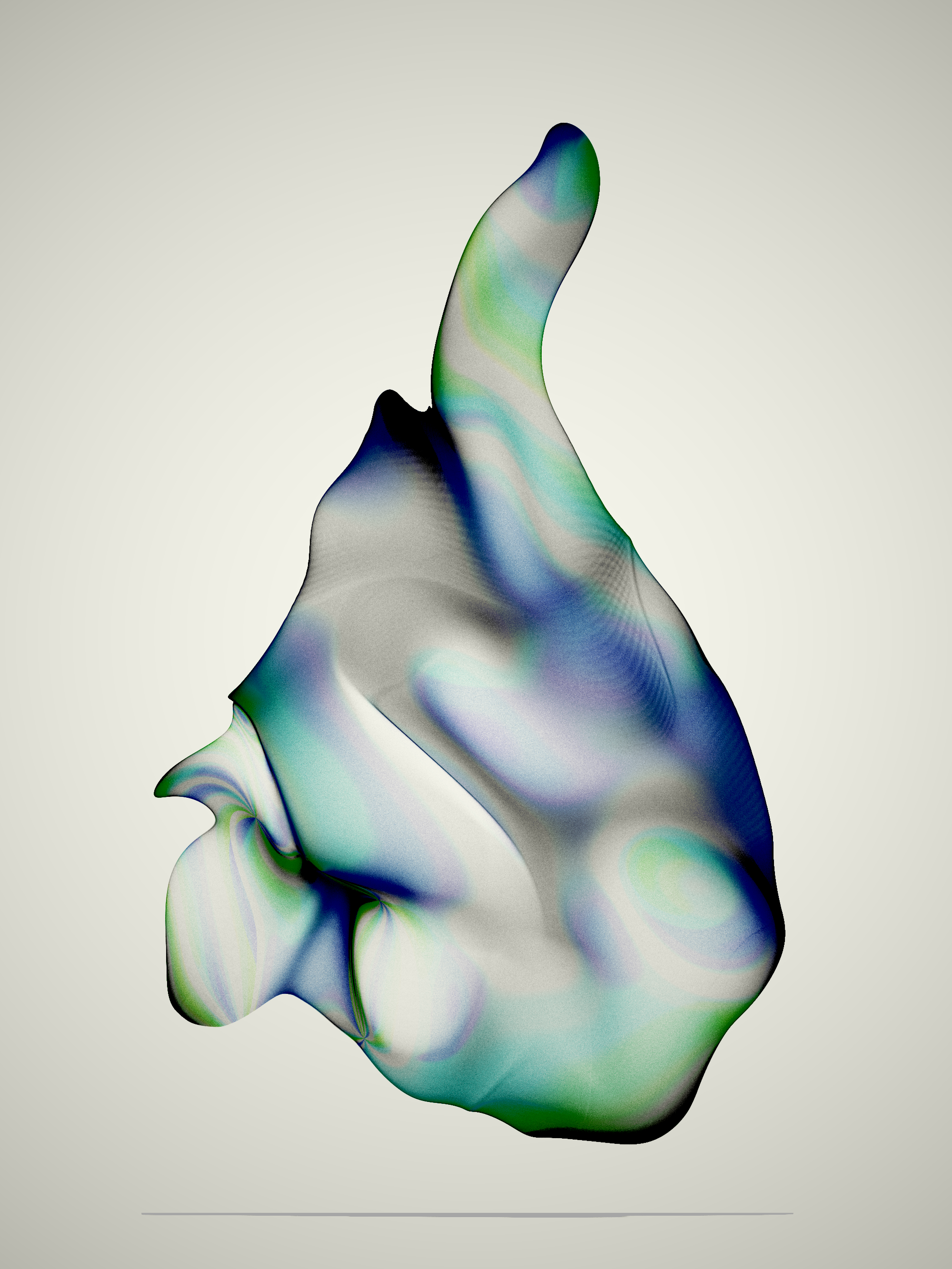
The number of particles present in a shape has a profound impact on its appearance. With a smaller number of particles, the shape appears empty and incomplete, featuring gaps and less pronounced dark areas. In contrast, an increase in particle count results in a shape that looks full and complete, boasting darker and more noticeable dark areas. Furthermore, the added particles lend a greater level of detail and shading to the shape, enhancing its overall realism.
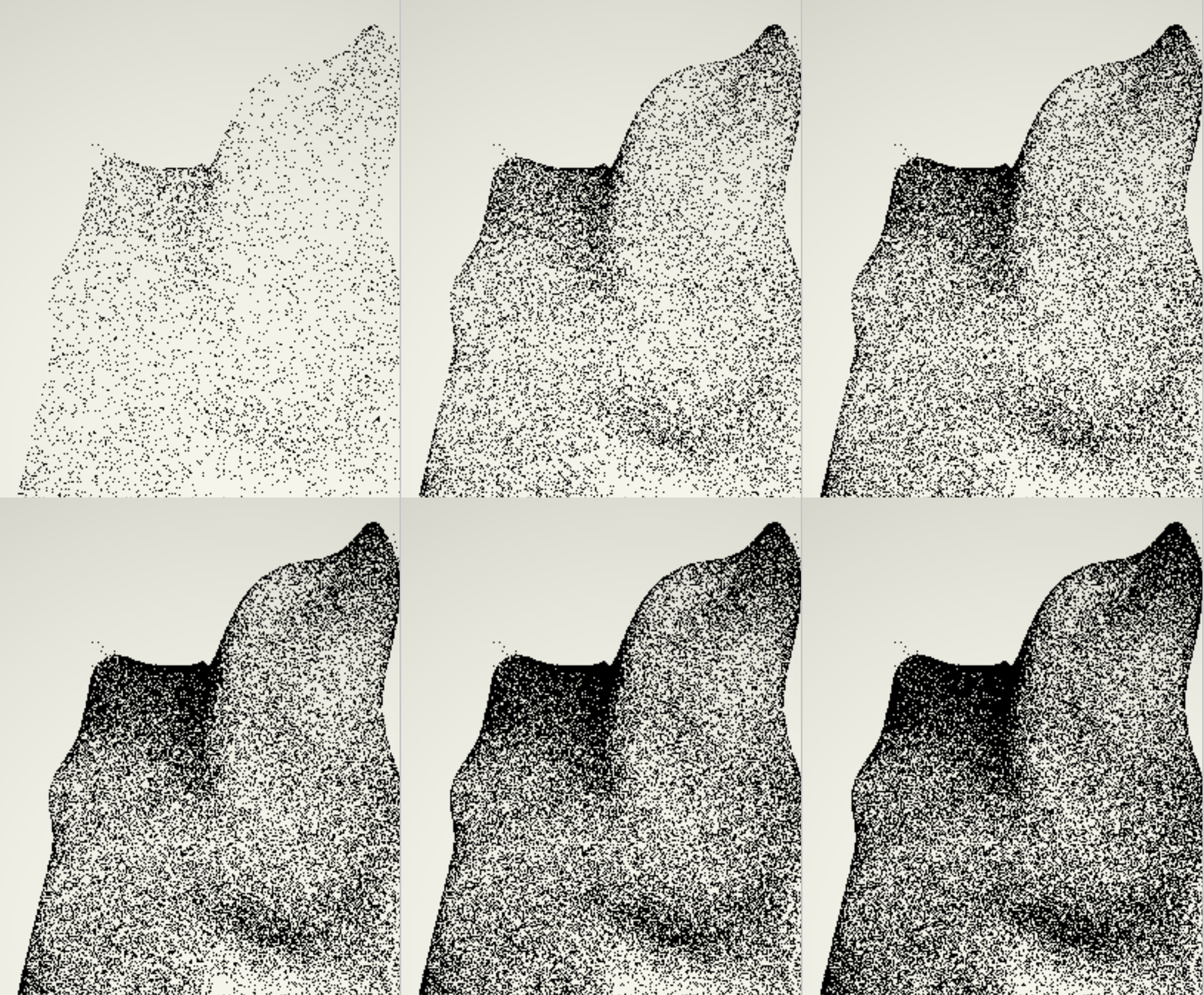
Crafting visually captivating images using particles has become an engaging pursuit. The number of particles plays a crucial role, such that using 50 million particles marked a turning point. This allowed for smoother surfaces and a more cohesive and visually harmonious image. The key to this approach was to tone down the effect of each particle, resulting in a cohesive and visually harmonious image. Moreover, using many particles and reducing the effect of each particle leads to better images with smoother surfaces and cohesive visuals. GPU computing and WebGPU are powerful tools that can create visually stunning and immersive experiences by leveraging this approach.
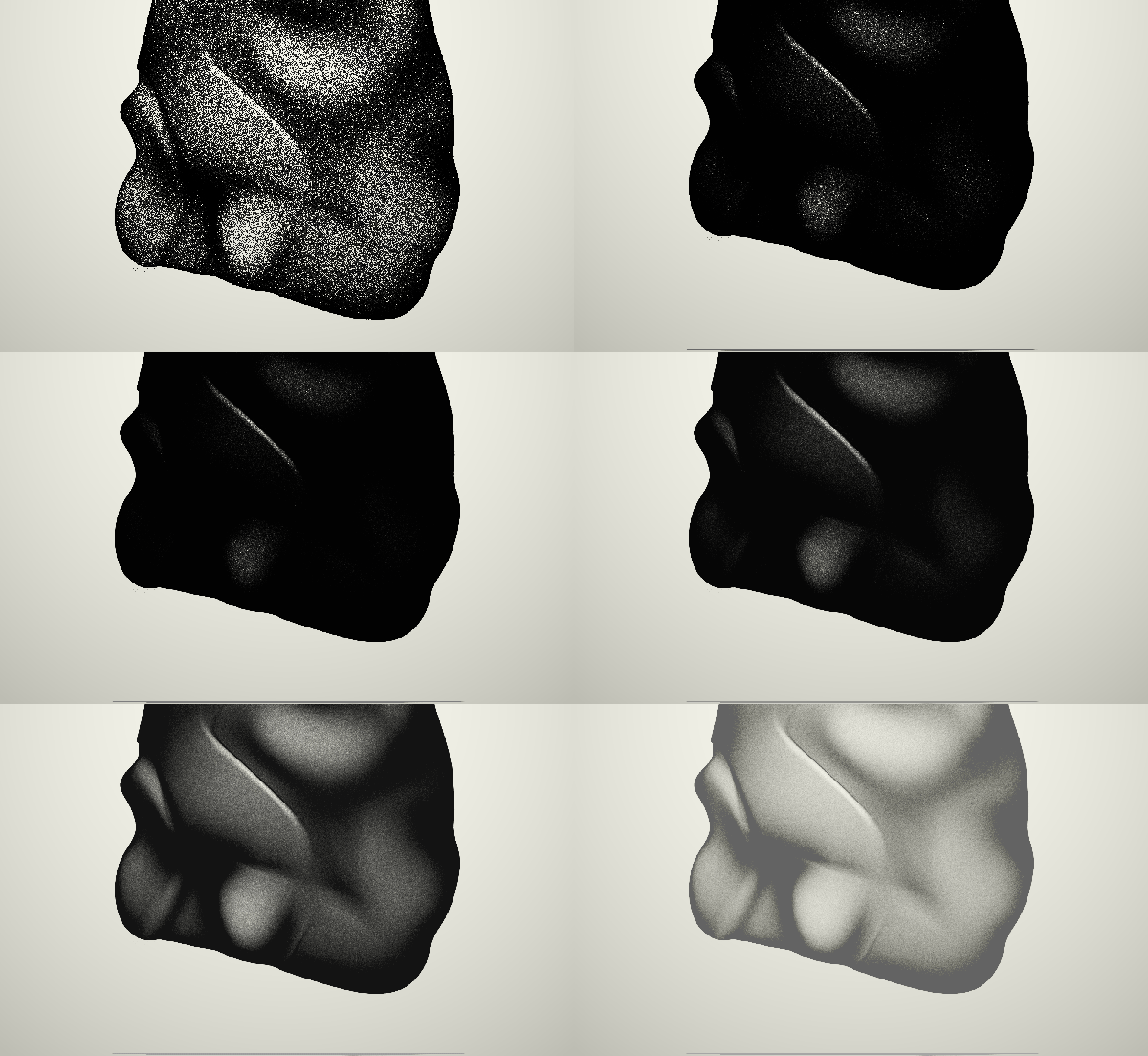
In the next step, I assigned colors to the particles based on a combination of their initial position, their trajectory, and their velocity. This allowed me to create a sense of depth and movement within the shape. Particles located in denser areas were given darker colors, enhancing the illusion of depth. Additionally, I applied a "push" effect to the shape, which further accentuated its three-dimensional qualities. This technique helped to create a visually compelling and immersive representation of the shape, making it appear to float and move in space.
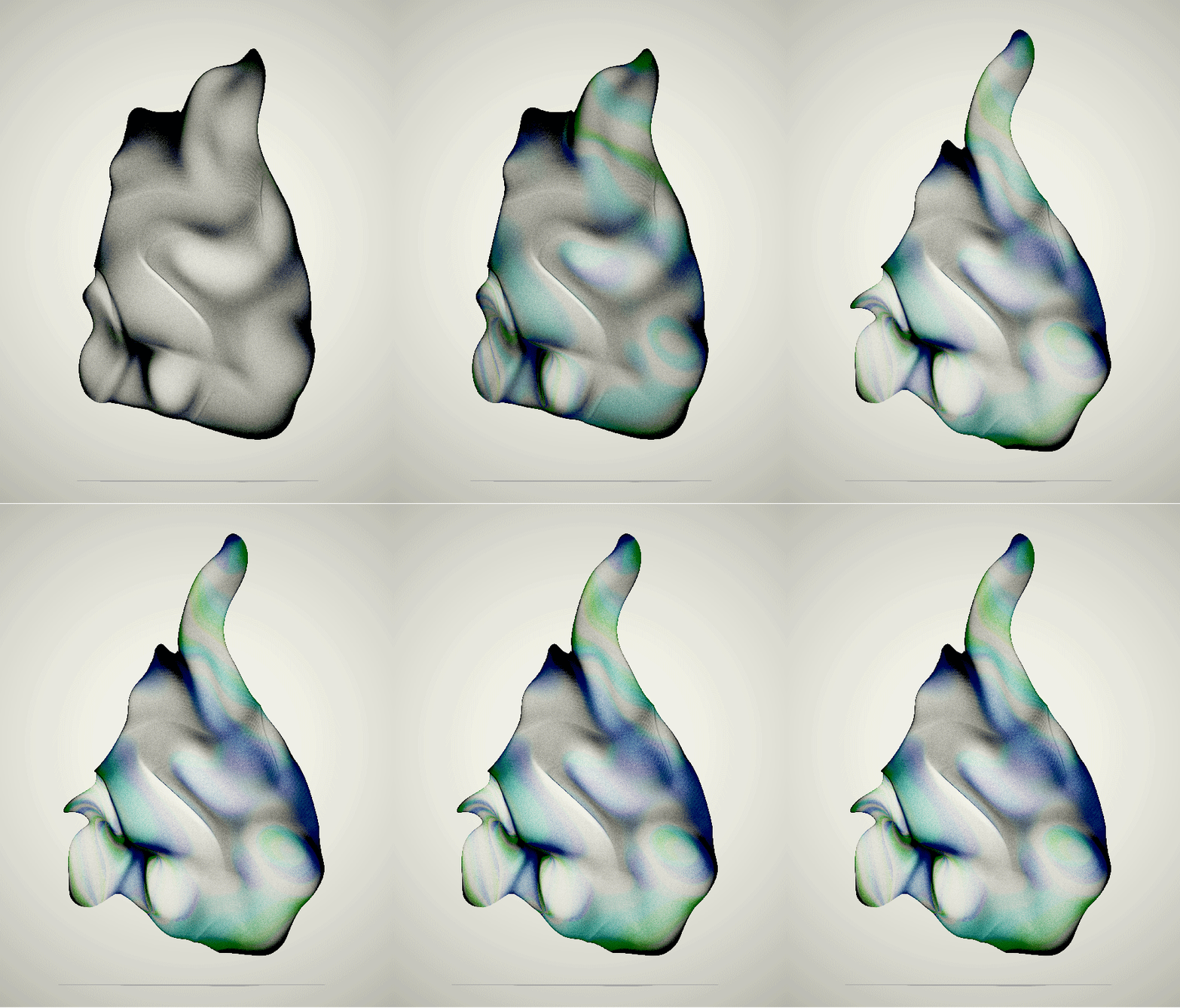
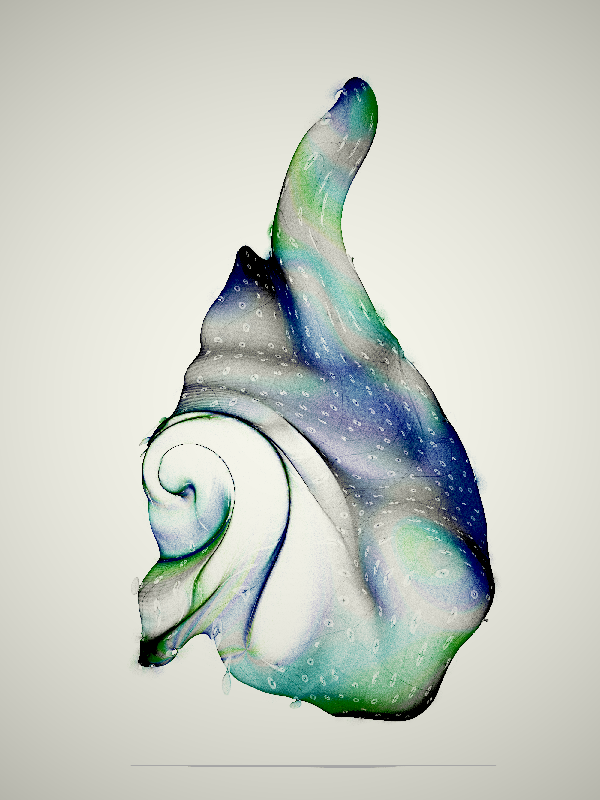
Lastly, I implemented several form features to account for various textures, such as goosebumps, and gained intricate control over the shape, allowing for effects like swirls and breaks. Furthermore, I incorporated image effects, such as the reflection pool. Here are some illustrative examples of these systems in action:
I worked on this project for a long while, during which the systems pivoted a few times, each an interesting direction by its own. I feel this iteration, whom I nurtured and refined a lot, is perfect and achieve all my goals for this project. I am extremely pleased with it, and feel proud to have made it.Throughout the course of this project, I have dedicated countless hours, pouring my heart and soul into its development. During this journey, the systems underwent several pivotal shifts, each presenting unique and intriguing directions. With each iteration. I meticulously nurtured and refined the project, striving for perfection. In its current form, I am confident that it embodies all the goals I set out to achieve. A profound sense of satisfaction washes over me, knowing that this iteration represents the culmination of my efforts. I am incredibly proud of the outcome, and it stands as a testament to my dedication and perseverance.