2024-02-25
A Brief History of Algorithmic Generation of Chinese Painting
This article outlines the development history of algorithmically generated Chinese painting, showcasing significant milestones from the establishment of the Institute of Computing Technology at the Chinese Academy of Sciences in 1956 to the development of digital brush technology in the early 21st century, and the explorations by artists such as Huang Lingdong and Random Combo. It reflects that Song has a significant role in promoting the historical significance of algorithm-generated Chinese paintings.
At the inception of New China in 1949, the disciplines of computer science, professional talent, and computer development were virtually non-existent domestically. However, merely seven years later, in 1956, a team led by Professor Hua Luogeng established the Institute of Computing Technology at the Chinese Academy of Sciences—China's first computer research institution, symbolizing the commencement of China's computer endeavors. In 1971, pioneers in computer graphics like Liu Shenquan from the Institute initiated a new chapter in computer-aided design research and subsequently established a CAD research lab, laying the foundation for the development of computer graphics and scientific computing visualization in China.
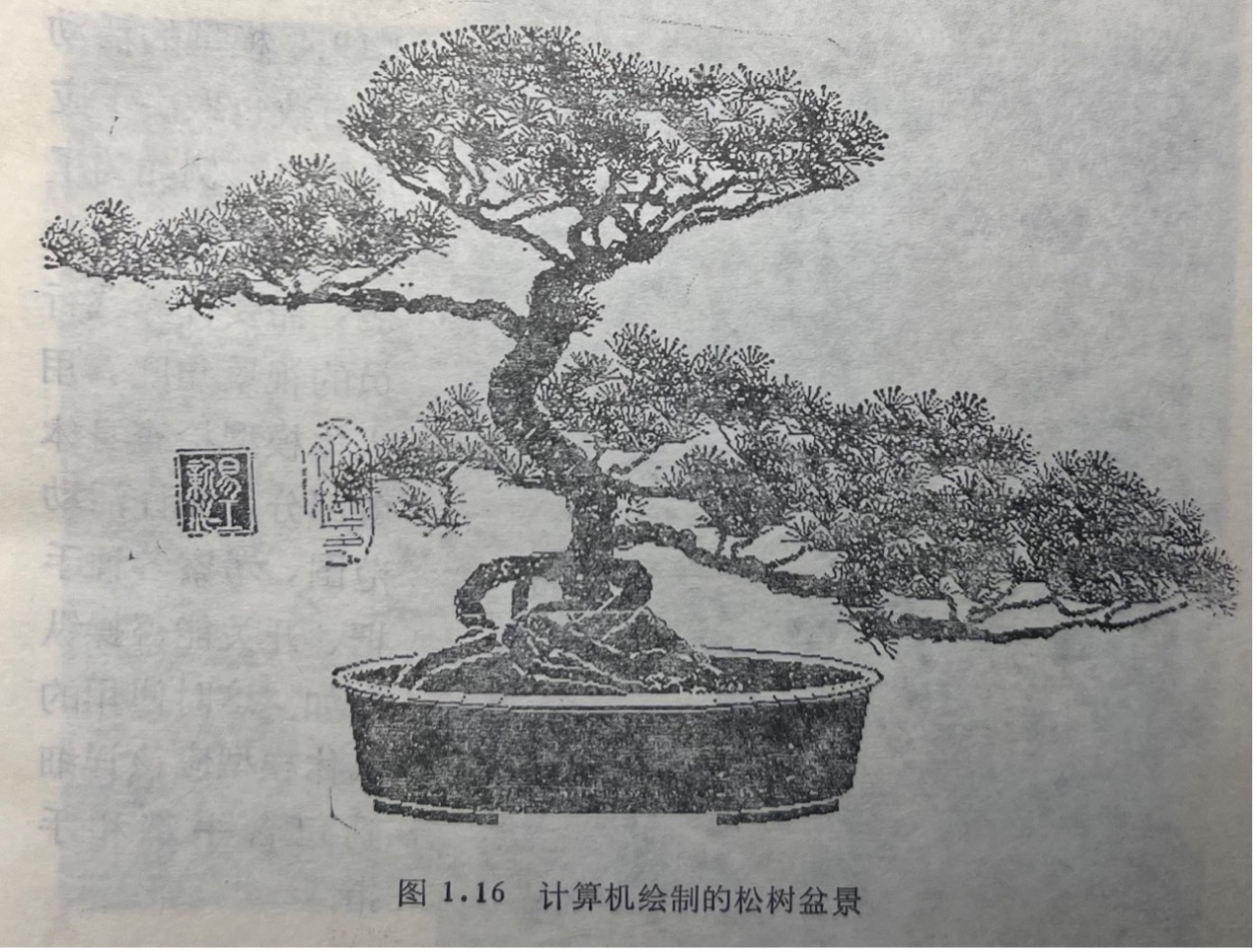
Simultaneously, looking back to the 1960s, engineers like Michael Noll, Leon D. Harmon, and Kenneth C. Knowlton from Bell Labs in the United States were exploring the unconscious applications of computers in artistic creation in their spare time, similar explorations were being conducted by researchers at the Institute of Computing Technology of the Chinese Academy of Sciences. Particularly influenced by traditional Chinese art, digital Chinese painting became one of the earliest forms of digital art. Curator Arctic has traced back to the earliest known digital Chinese ink painting featured in the "Computer Graphics Tutorial" by Professor Tang Rongxi and others. The book mentions that as early as 1985, domestic artists were creating flat artworks using intelligent CAD systems. One such computer-drawn pine bonsai artwork was exhibited at the China Pavilion of the 1985 Japan Tsukuba Expo, marking the preliminary international debut of Chinese digital ink painting. This work not only demonstrated early applications of computer graphics in artistic creation but also laid the foundation for the development of digital ink painting.
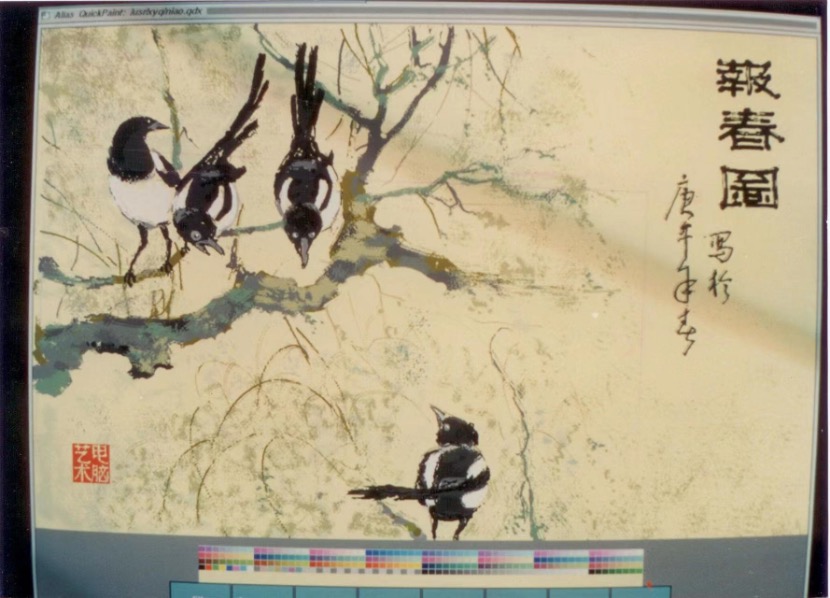
Entering the 1990s, with the continual iteration and upgrading of digital brush systems, the quality of digital ink painting significantly improved, injecting new vitality into the development of computer graphics in China. According to the information I have found, Professor Qi Dongxu, one of the pioneers of computer graphics in China, began extensively using computers for ink painting creation in the 1990s. Notably, this was before the widespread availability of touchpad devices, so Professor Qi used a mouse to complete these digital ink works. His creations not only demonstrated the application of digital technology in traditional artistic creation but also highlighted the limitations and challenges of digital painting tools at that time. Professor Qi's innovative practice provided important insights and inspiration for the later development of the interdisciplinary field of art and computer science.
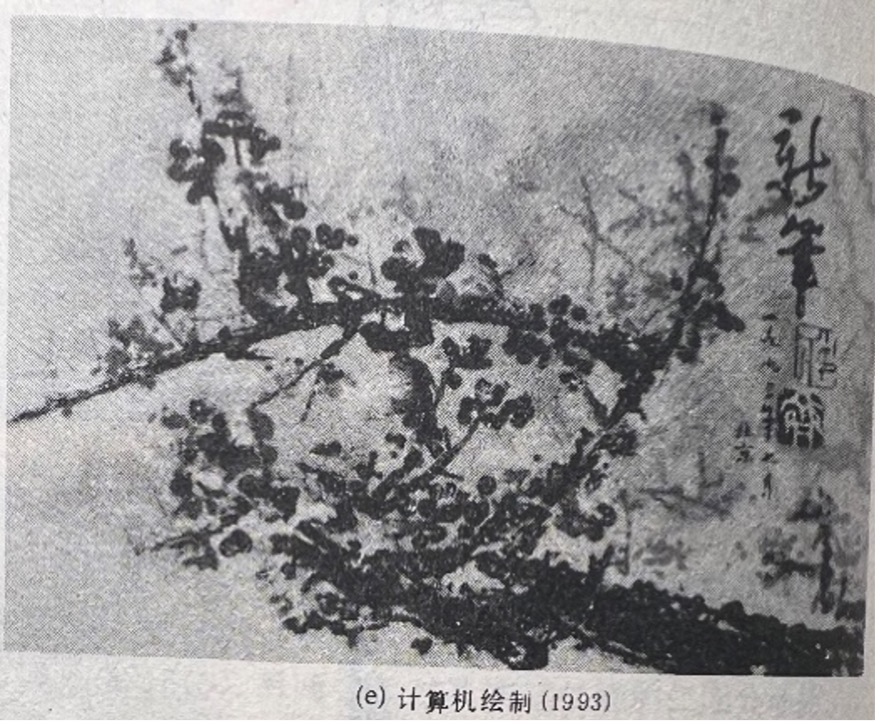
Since the dawn of the 21st century, rapid advancements in computer hardware and software technologies have opened unprecedented opportunities for the creation of digital Chinese paintings. Notably, the digital brush systems developed by Microsoft Research Asia and Zhejiang University have significantly propelled innovation and diversity in painting and calligraphy. This period saw researchers and artists leveraging these advanced digital brush tools to create numerous digital Chinese ink paintings, facilitating the evolution of traditional Chinese art in the digital era. Progress in technology also expanded research from static creation to dynamic exploration. Particularly in 2006, the publication of "Animating Chinese Paintings Through Stroke-Based Decomposition" marked a milestone, introducing a new technique for animating Chinese-style paintings by extracting and analyzing stroke descriptions.
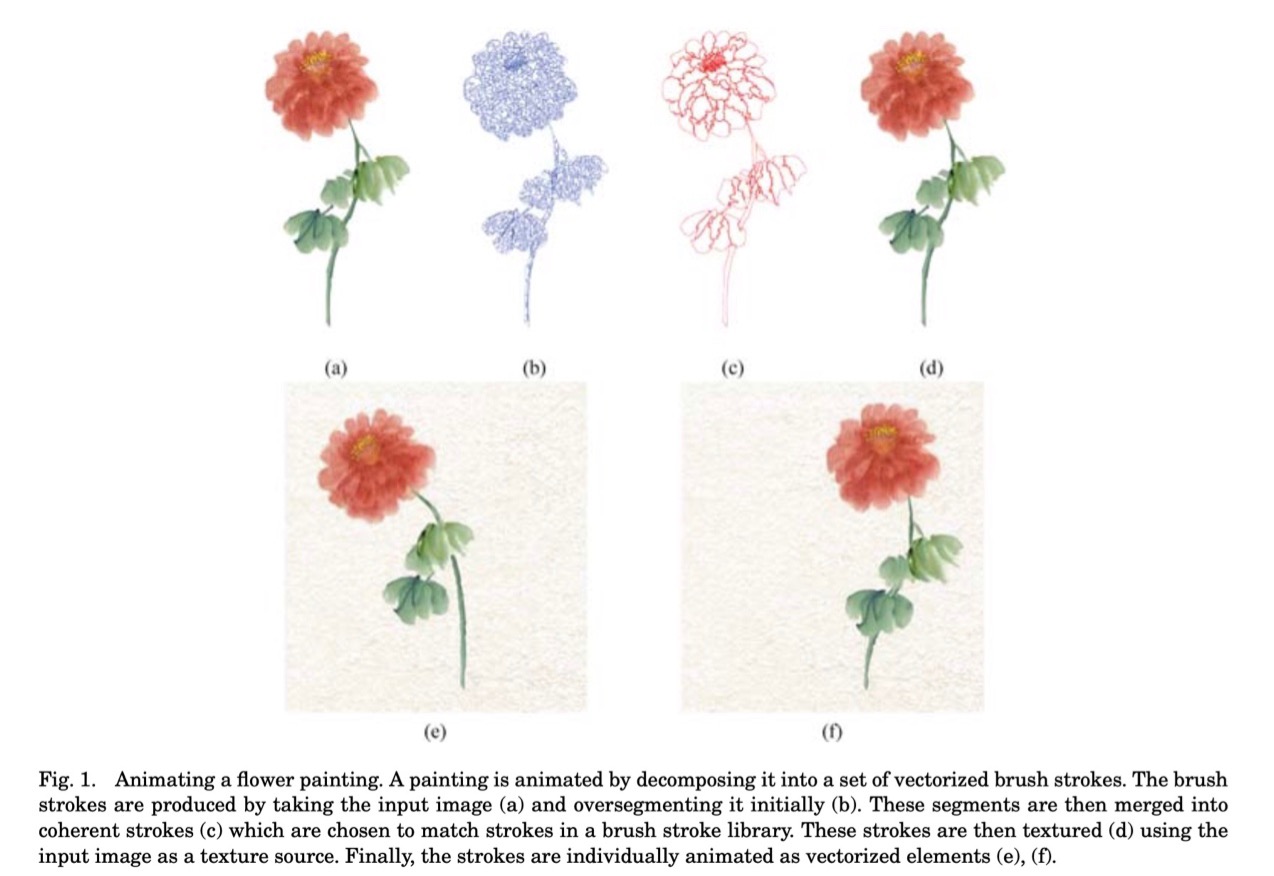
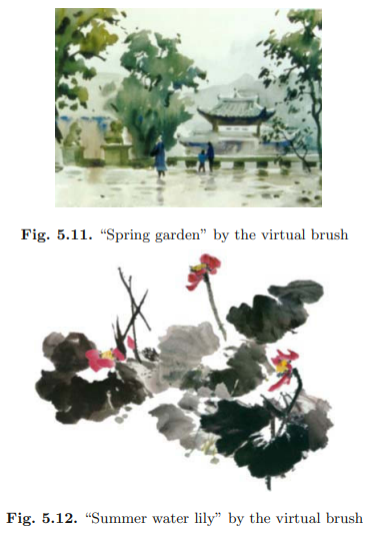
Between 2000 and 2010, significant advancements were made in research on digital brush systems and Chinese ink painting generation systems, with the achievements compiled in "A Computational Approach to Digital Chinese Painting and Calligraphy," showcasing a vast array of digital Chinese ink paintings from this period.
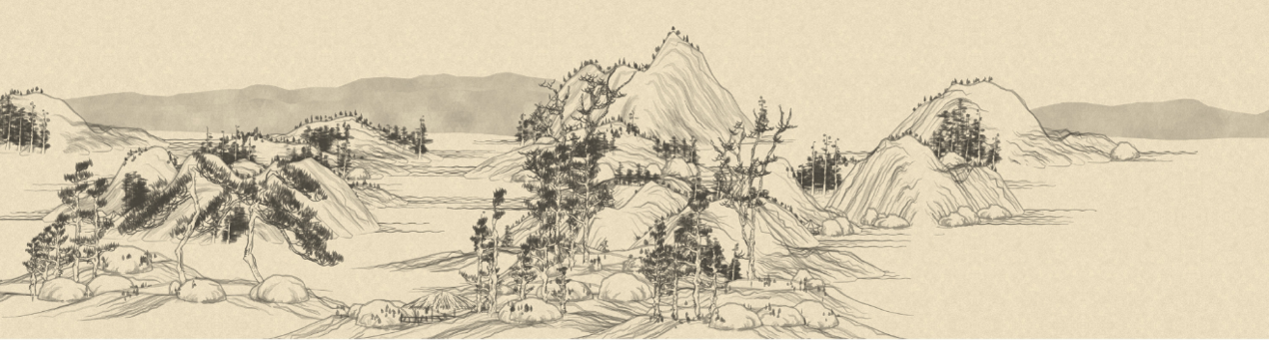
In recent years, with the rise of algorithmic generative art, artists and researchers have begun to explore converting the style and expressive concepts of Chinese ink painting into mathematical algorithms for automated creation. Among them, Huang Lingdong from Carnegie Mellon University stands out for integrating algorithms with traditional Chinese landscape paintings, with his 2017 work "Shan, Shui" being a prime example. This piece, inspired by traditional Chinese landscape scrolls, utilizes noise and mathematical functions to build visual representations of mountains and trees from scratch, entirely coded in JavaScript and output in SVG format. This innovative approach not only achieves a remarkable visual realism but also demonstrates the potential of mathematical algorithms to abstract and refine the principles and characteristics of Chinese landscape painting.
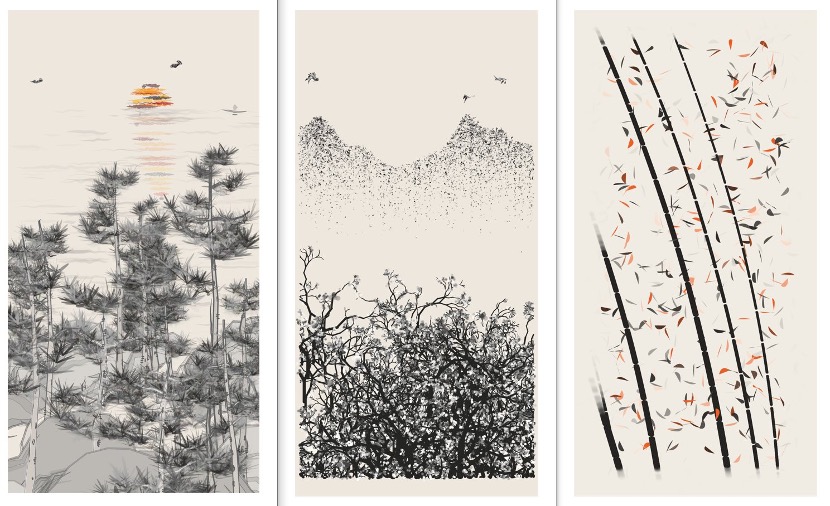
From an engineering history perspective, the development of algorithmically generated Chinese painting seemed to enter a quiet period after Huang Lingdong released the "Shan, Shui" series in 2017. The field's stringent demands on artists' comprehensive abilities, especially in aesthetics, mathematics, and programming, resulted in a limited number of artists capable of producing high-quality works and few who significantly pushed technological innovation. However, in 2021, the tide changed with Singapore-based computer physics PhD and generative artist Random Combo. Utilizing the p5.js tool, he created "Zhu" and "Mei," infusing generative art with the essence of Eastern aesthetics. In 2024, Random Combo's "Song," a culmination of two years of dedication, marked a renaissance in the journey of algorithmic Chinese painting, propelling algorithmic Chinese landscapes to new heights.
Conclusion
This article outlines the development history of algorithmically generated Chinese painting, showcasing significant milestones and innovations in computer graphics and algorithmic art in China since the founding of New China. From the establishment of the Institute of Computing Technology at the Chinese Academy of Sciences in 1956 to the development of digital brush technology in the early 21st century, and the explorations by artists such as Huang Lingdong and Random Combo, this journey reflects the impact of technological progress on artistic creation methods and the innovation and evolution of traditional Chinese art under the influence of modern technology. The rise of algorithmic art has carved new pathways for the inheritance and development of Chinese ink painting, illustrating the infinite possibilities of integrating traditional art with modern technology. Through this historical overview, we see how artists and technologists together drive the transformation of art forms and how algorithmic art finds new expressions in inheriting and innovating, bringing new vitality to Chinese painting on the global new media art stage.