2024-04-29
Behind “Island Mist”
My journey in generative art began with a fervent desire to replicate the textures of traditional media using code. From my initial project, “Raked Stokes,” to my latest endeavor, "Island Mist," I've been on a continuous quest to emulate the tactile sensations of brushstrokes and the subtle blending of colors through code.
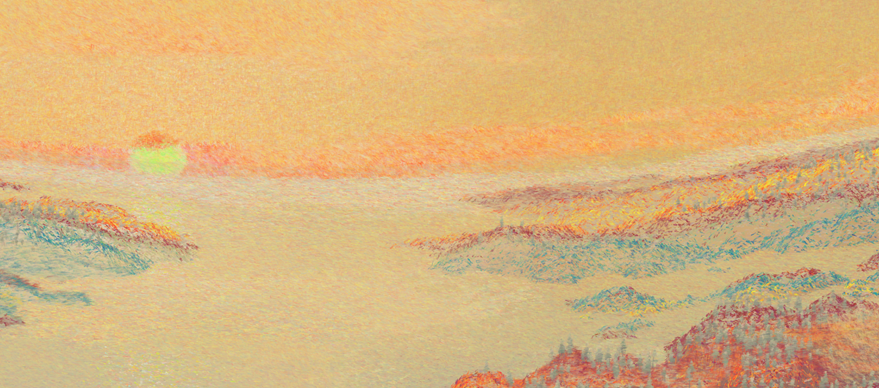
My journey in generative art began with a fervent desire to replicate the textures of traditional media using code. From my initial project, “Raked Stokes,” to my latest endeavor, "Island Mist," I've been on a continuous quest to emulate the tactile sensations of brushstrokes and the subtle blending of colors through code.
"Island Mist" represents my latest attempt to capture the feeling of impressionist paintings using algorithms. In addition to employing an impressionistic palette, this piece draws inspiration from the principles of pointillism and the vibrant color schemes found in fauvist landscapes.
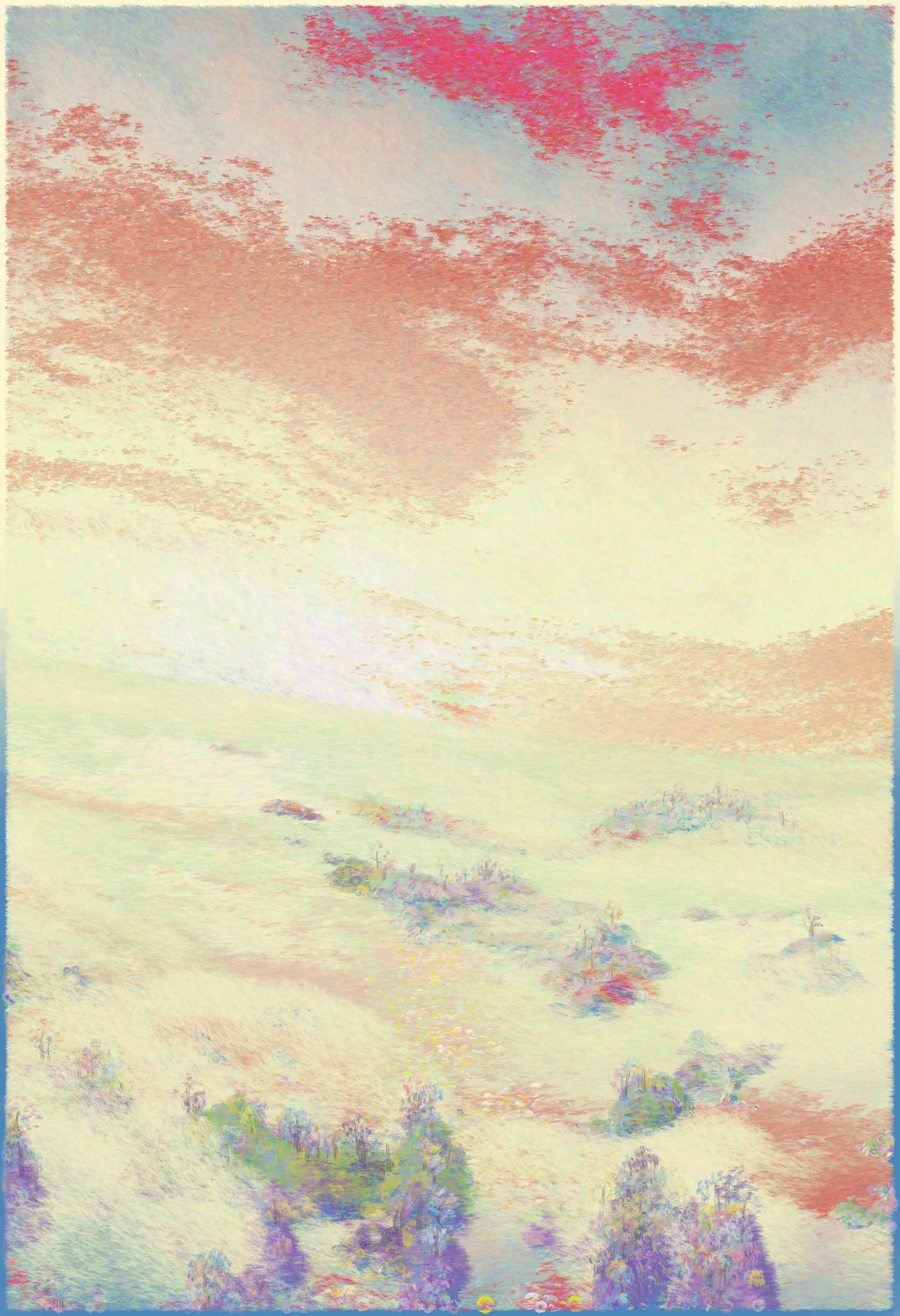
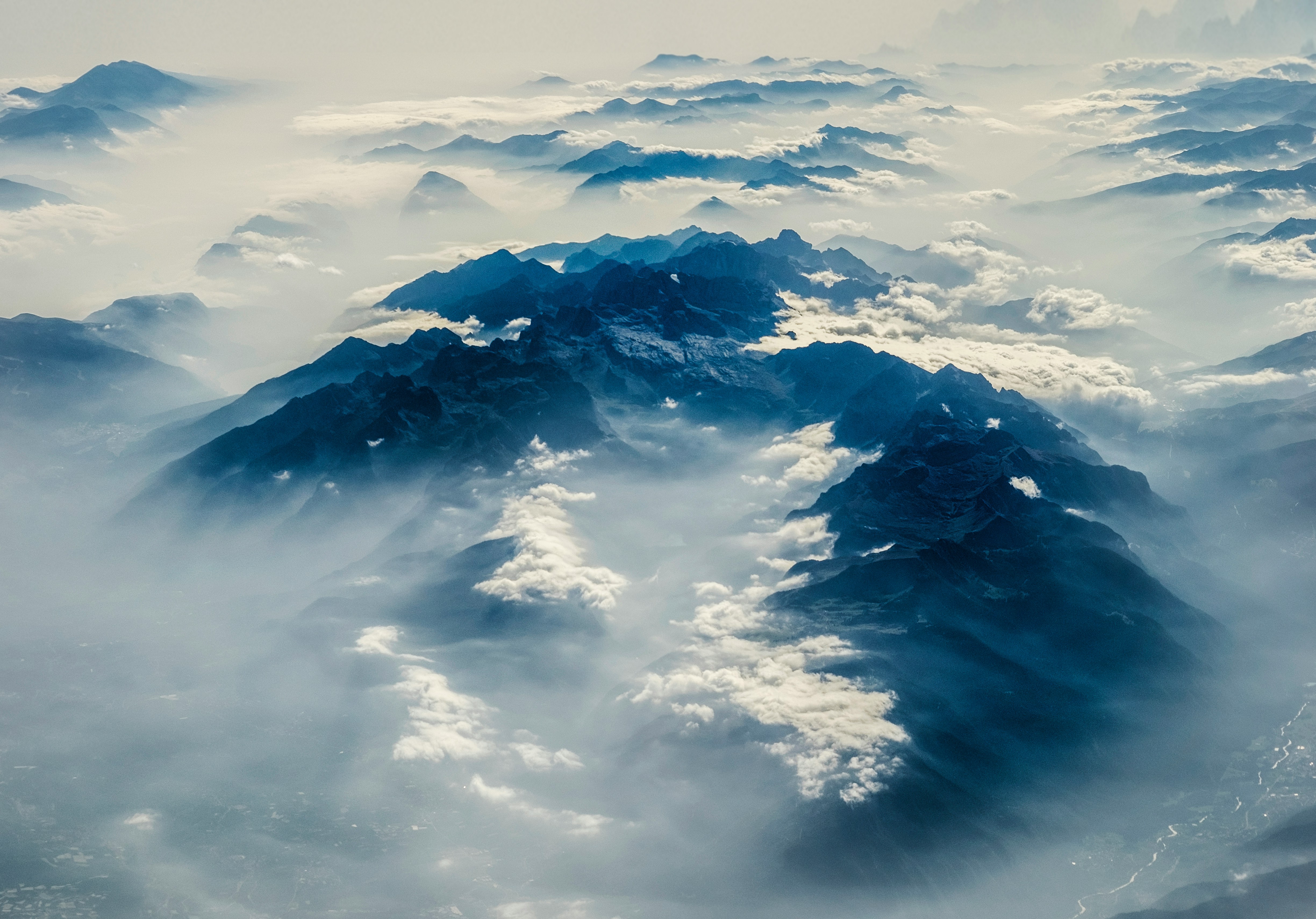
In my previous work, "Lake Festival," I focused on intimate settings, aiming to evoke a sense of personal connection within the viewer. With "Island Mist," however, I sought to expand the scope, offering a grander vista for the observer. The inspiration for this piece struck me when I came across an aerial photograph of the Alps by Zoltan Tasi. The layers of mountains on the horizon, and the ground shrouded in a sea of mist, ignited my imagination and provided the perfect foundation for my artistic exploration.
Publishing my work on Genify prompted me to transition from my personal framework to p5js. This shift required several weeks of dedicated effort to adapt my brush algorithm and color blending techniques to align with p5.js's drawing, noise, and color functions. The process resulted in code that was not only more focused but also significantly more optimized than my previous works.
With this foundation, I started creating the scene for "Island Mist." I used Perlin noise to make lifelike mountain landscapes and added depth and perspective with linear transformations. Blending colors smoothly from the sky to the land below, I aimed to recreate the atmospheric effects found in landscape paintings.
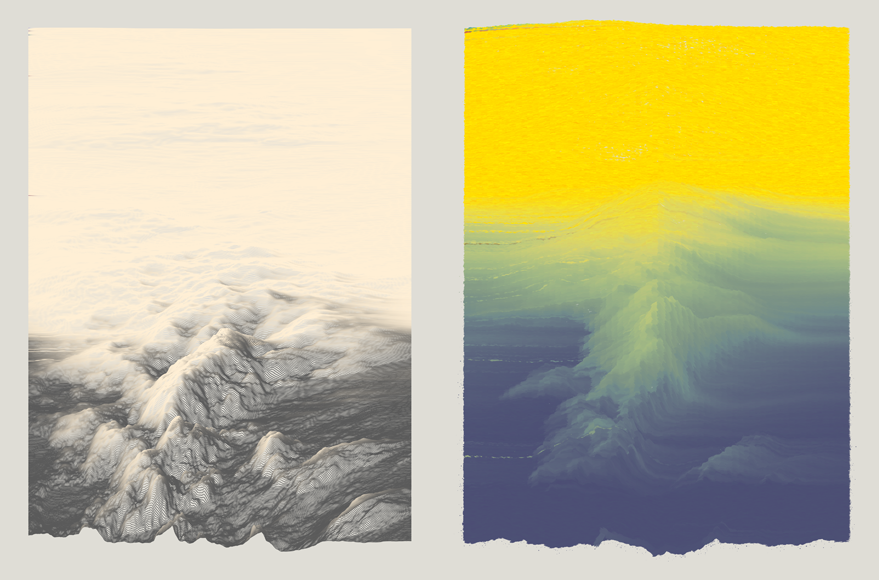
Core concept established, I began to add details and define brush strokes to bring "Island Mist" to life. Creating a scene using a noise function involves plotting points down and across the canvas. To define the atmosphere, I determine if the point in the sky, in a cloud, and how far from the horizon to add the right amount of haze.
For the land masses, I stratify layers, assigning each row a distinct color and shading it based on the angle of the line segment from one point to the next. The water level was determined by the noise value at each point: if it fell at or below the midpoint noise value, it was designated as water; otherwise, it was considered land.
Additionally, I introduced trees and flowers in areas where the slope was more shallow, mimicking their natural placement.
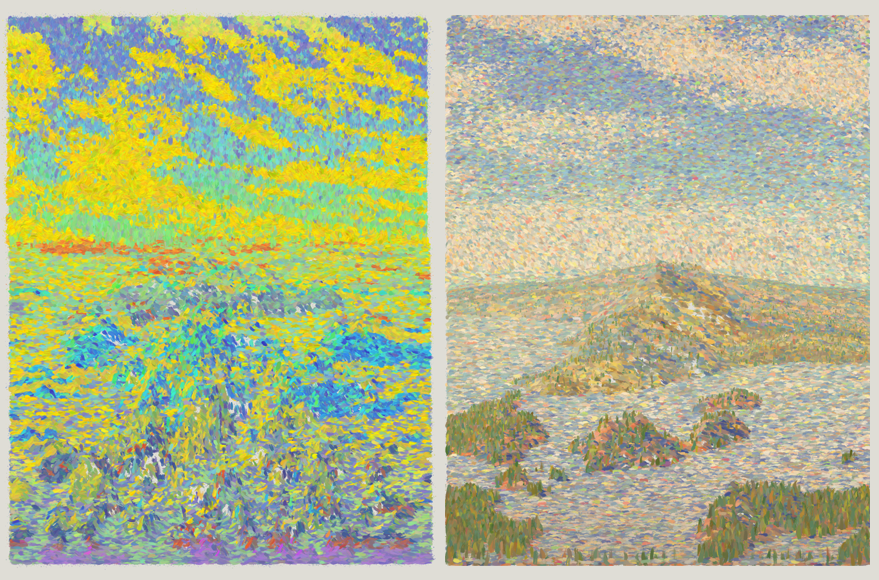
To imbue the world of "Island Mist" with a sense of scale and dynamism, I made the decision to showcase the curvature of the Earth. This addition injected a new level of excitement into the work and opened up fresh creative possibilities.
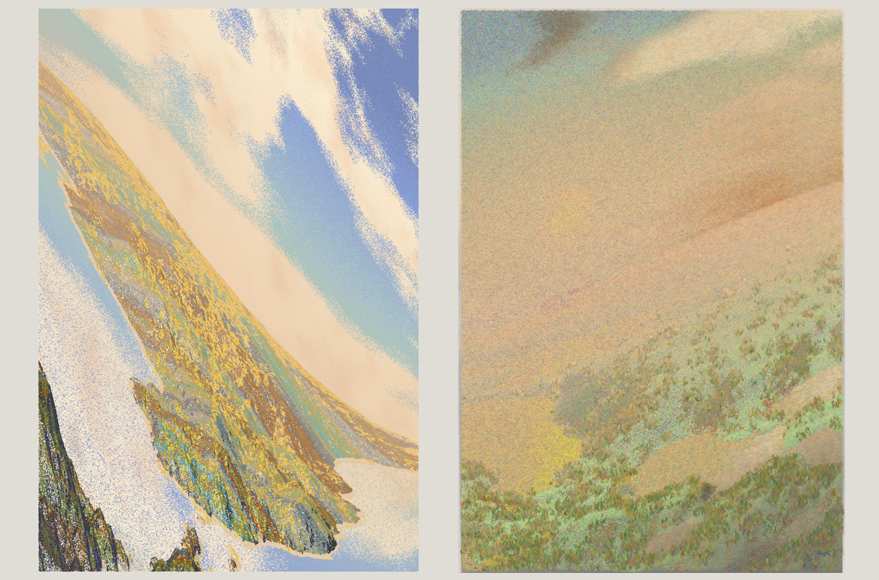
Implementing a sinusoidal wave to warp the clouds, sun, and landscape created the sensation of fast travel in an airplane, as if it were banking through the sky. Through experimentation, I discovered that a smaller range of warping effects worked more effectively than a larger one, as demonstrated below.
The next challenge I faced was creating a series of palettes for the sky to tint the entire piece effectively. I carefully selected colors for the top and bottom of the sky, the sun and its halo, as well as the atmospheric haze. These colors were blended for each stroke using an algorithm based on the Kubelka-Munk model..
In this process, each color was converted from red/green/blue to red/yellow/blue, blended proportionally, and then converted back to red/green/blue before being rendered on the screen. This method of color blending yields hues and values much closer to real-world pigment blending.
One peculiarity of this approach is the vivid color artifacts that sometimes occur near the bright sun and horizon areas. Despite being unintended, I made the deliberate choice to keep these artifacts in the piece because they contribute to stunning results that wouldn’t be achievable using conventional methods.
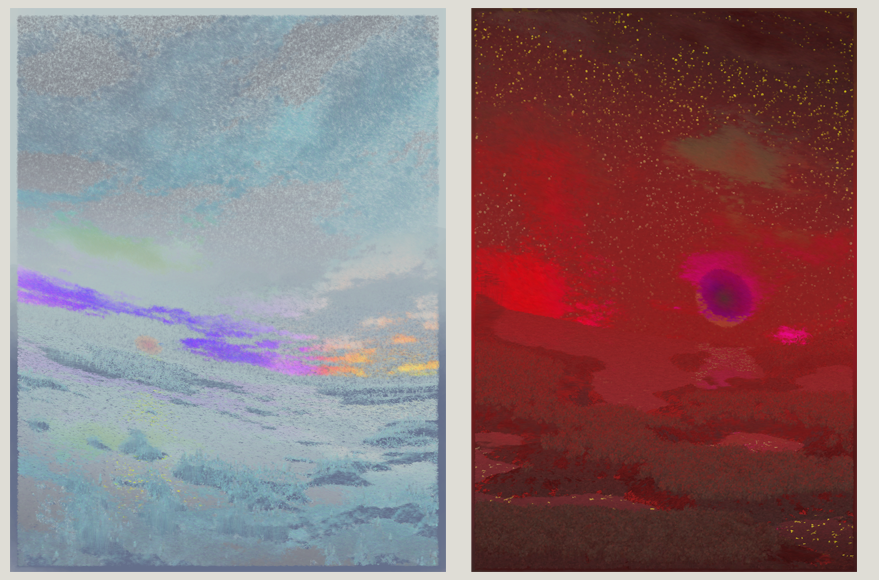
As you explore "Island Mist," my hope is that you discover a sense of wonder in the beauty of the world and the endless possibilities that can be achieved through code. I firmly believe that algorithmic art possesses the capability to match the beauty of traditional methods and evoke the same profound emotions. Through meticulous blending of colors, meticulous attention to detail, and innovative techniques, I strive to demonstrate that the boundaries of artistic expression are limitless, transcending the traditional boundaries of medium and method.