2024-02-03
Curation of GHOST
Omar's work serves as a captivating intersection between optical art, modernist architecture, urban planning, and generative art. On a visual level, the initial impression may be one of optical art, characterized by its intricate patterns and visual illusions. However, delving deeper into the artist's intent reveals a profound exploration of societal disillusionment, with a specific emphasis on urban brutalism.
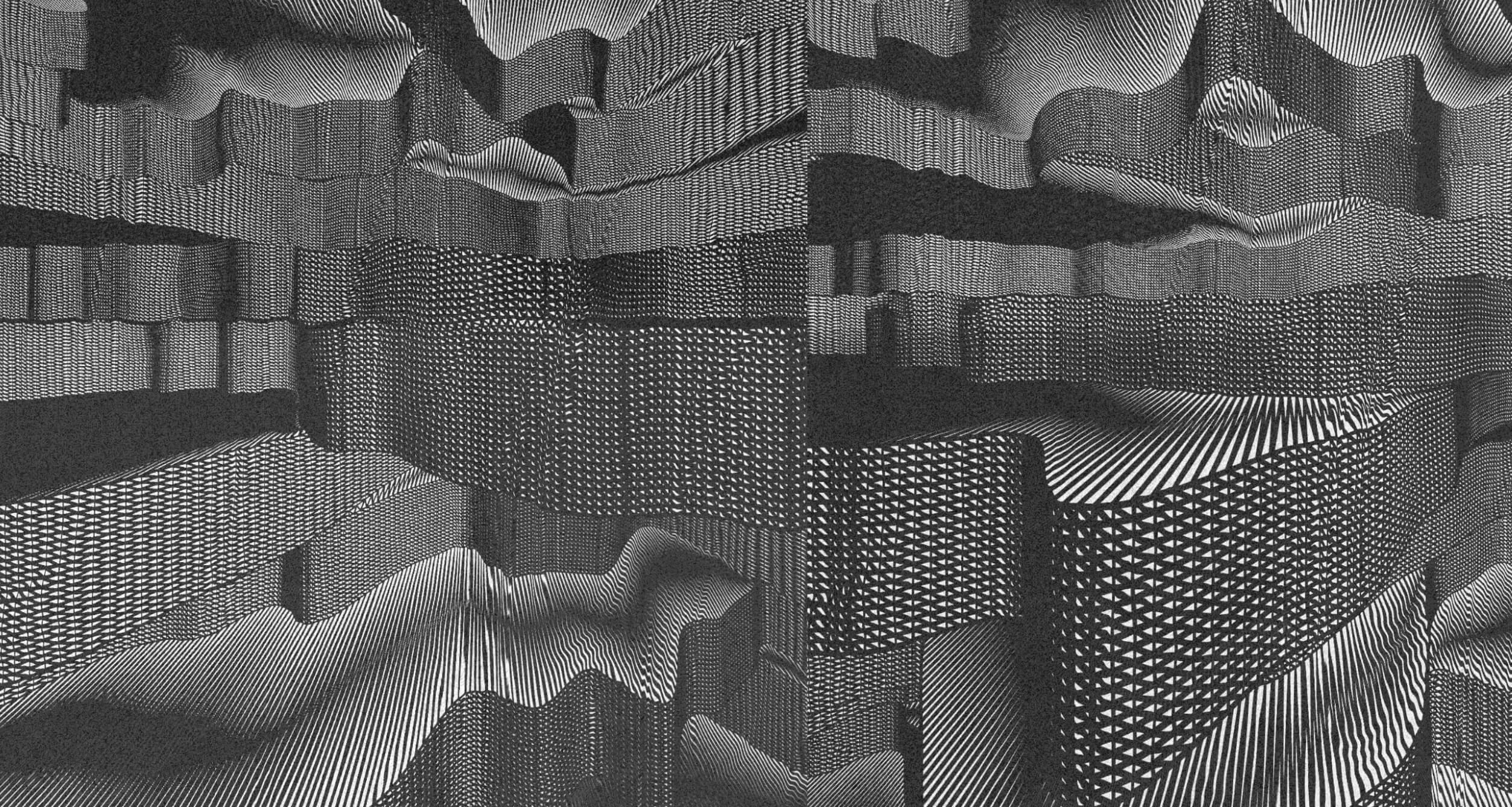
The artist draws inspiration from the renowned architect Oscar Niemeyer, particularly his work Edifício Copan. This architectural masterpiece, influenced by Le Corbusier's Unité d'habitation, represents an ideation of planned self-containing harmony. Niemeyer, in his departure from straight angles and rigid lines, expressed a preference for free-flowing, sensual curves inspired by the natural elements of his homeland.
Parallel to Niemeyer's departure from European aesthetics, Omar's compositions of brutalistic optical art signify a break from conventional artistic norms. While Le Corbusier and Bauhaus played crucial roles in shaping optical art, Omar's Ghost series distinctly forges its own path, embracing the unique curves and forms found in his country's mountains, rivers, oceans, and the human body. The convergence of optical art and modernist architecture in Omar's work reflects a juxtaposition of artistic and architectural ideologies. Edifício Copan and similar structures symbolize planned harmony, yet the artist introduces an element of discord, mirroring societal disillusionment, with shaders and noise, result in brutalistic weaves. This divergence echoes Niemeyer's own departure from Le Corbusier's rigid principles, emphasizing the artist's pursuit of unconventional beauty in the curved universe.
In the realm of generative art, Omar's algorithms create spaces that form a metropolis where the artist's mind intersects with code. The planned and unplanned spaces within these generative compositions invite the audience to explore a virtual cityscape that transcends traditional artistic boundaries. The juxtaposition of planned harmony and chaotic unpredictability within these digital landscapes mirrors the complexities of urban planning and the human experience.
Ultimately, Omar's work acts as a thought-provoking synthesis of optical art, modernist architecture, urban existential identity, and generative art. Through the lens of his unique perspective, the artist challenges established norms, inviting viewers to engage with the intersections of form, ideology, and societal commentary within the evocative spaces he creates.