2024-02-25
Overview of the Development of Generative Landscape Painting in Web3
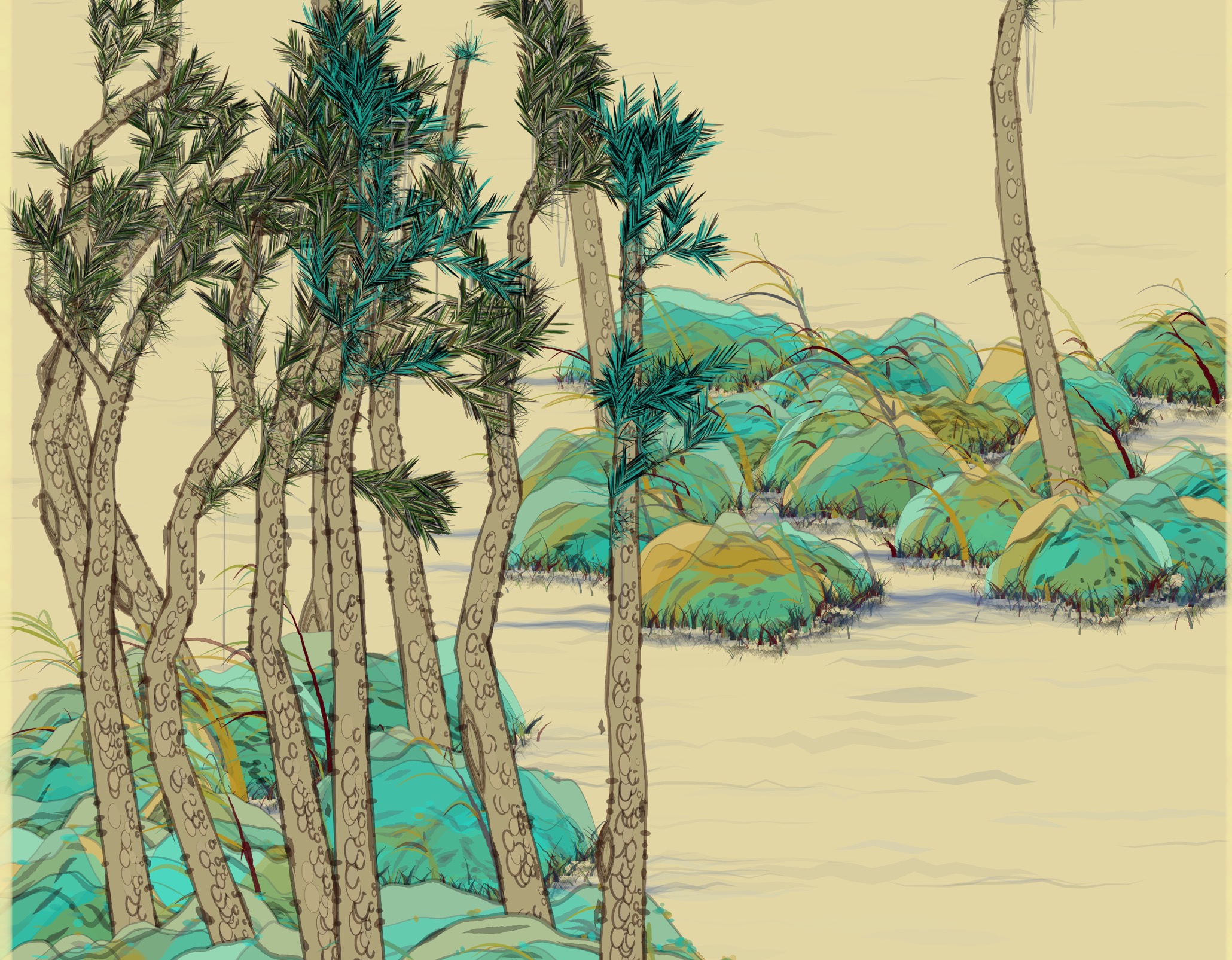
This is an analytical article on generative landscape art within Web3.0, listing several works of historical significance. These examples serve as references to help collectors understand the crucial historical placement of Random Combo's "Song" in the timeline of Web3.0 generative art development.
Abstract
In the past three years, generative landscape painting has emerged as a crucial branch within the domain of blockchain-based generative art, leading to the birth of numerous distinguished artists and their works. Today, with Random Combo's launch of the first generative landscape artwork on the BTC chain on the Genify platform, this provides an opportunity to review the development of generative landscape art within Web3.
Generative Landscape Painting
The essence of generative landscape painting lies in using computer algorithms to depict natural landscapes. Our natural world follows the laws of physics, chemistry, and biology, which are often describable through mathematical equations, yet, on the other hand, our world is filled with randomness and uncertainty. Interestingly, computers excel in both aspects: executing deterministic rules and managing randomness and noise. Therefore, generative landscape painting is a manifestation of human creativity. Moreover, the coding algorithms for generative art are typically developed by individual artists, making generative landscape painting a pinnacle of individual human intelligence.
The earliest iconic work of generative landscape painting on the Ethereum chain was "Subscapes" by Canadian artist Matt Deslauriers, with 650 editions priced at 0.1 ETH each. As the first long-form generative landscape painting in Web3, the algorithms used in "Subscapes" remain advanced even today, showcasing the leading edge of algorithmic art (information sourced from Matt's Medium): • 3D Projection — converting 3D points to 2D screen-space lines • Parametric Geometry — describing the surface with a pure function f=(x,y) • Noise — summing 2D simplex noise to determine terrain height • Quadtrees — recursive subdivision of the surface to form a quilt-like texture • Poisson Disk Sampling — distributing stroke surface positions uniformly • Flow Fields — used to create organic stroke motion across the surface • Raycasting — removing triangles that are back-facing or occluded • Diffuse Lighting — sometimes using lighting for stroke coloring • Procedural Color Selection — uniformly distributed high-contrast uniform palettes
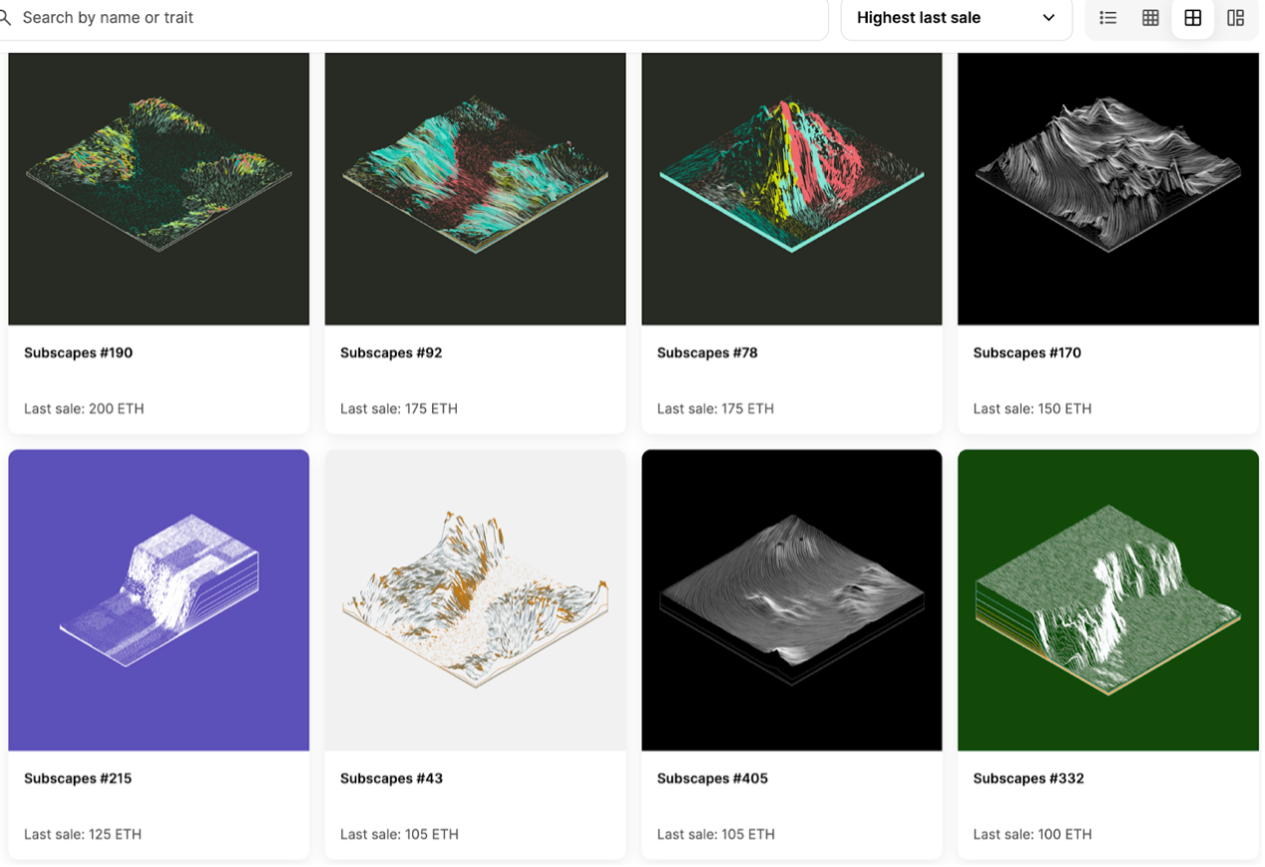
This significant historical positioning of "Subscapes" has led to its frequent appearances in auction houses like Sotheby's and its acquisition by Three Arrows Capital. As of today, "Subscapes" has achieved a total trading volume of 7805 ETH on OpenSea, with the current floor price being 2.59 ETH. During the bull market of 2021, the floor price of "Subscapes" neared 80 ETH.
Following "Subscapes," in September 2021, Matt Deslauriers released his second project "Meridian" on Artblocks, consisting of 1000 editions priced at 6 ETH each. Although September 2021 was a special period for Artblocks, rewarding all artists who launched works then with significant returns, many high-priced mints from that time have seen their prices fall to the bottom. However, the price of "Meridian" remains at 6 ETH today, highlighting some high-value transactions.
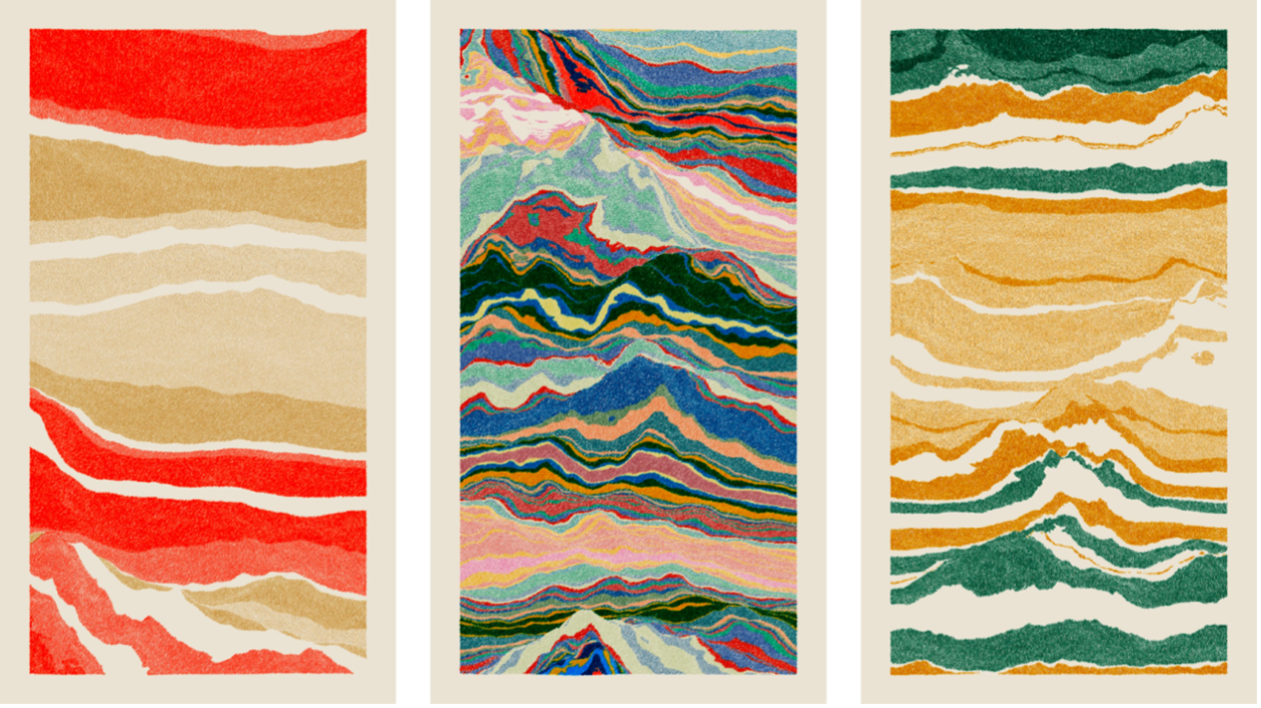
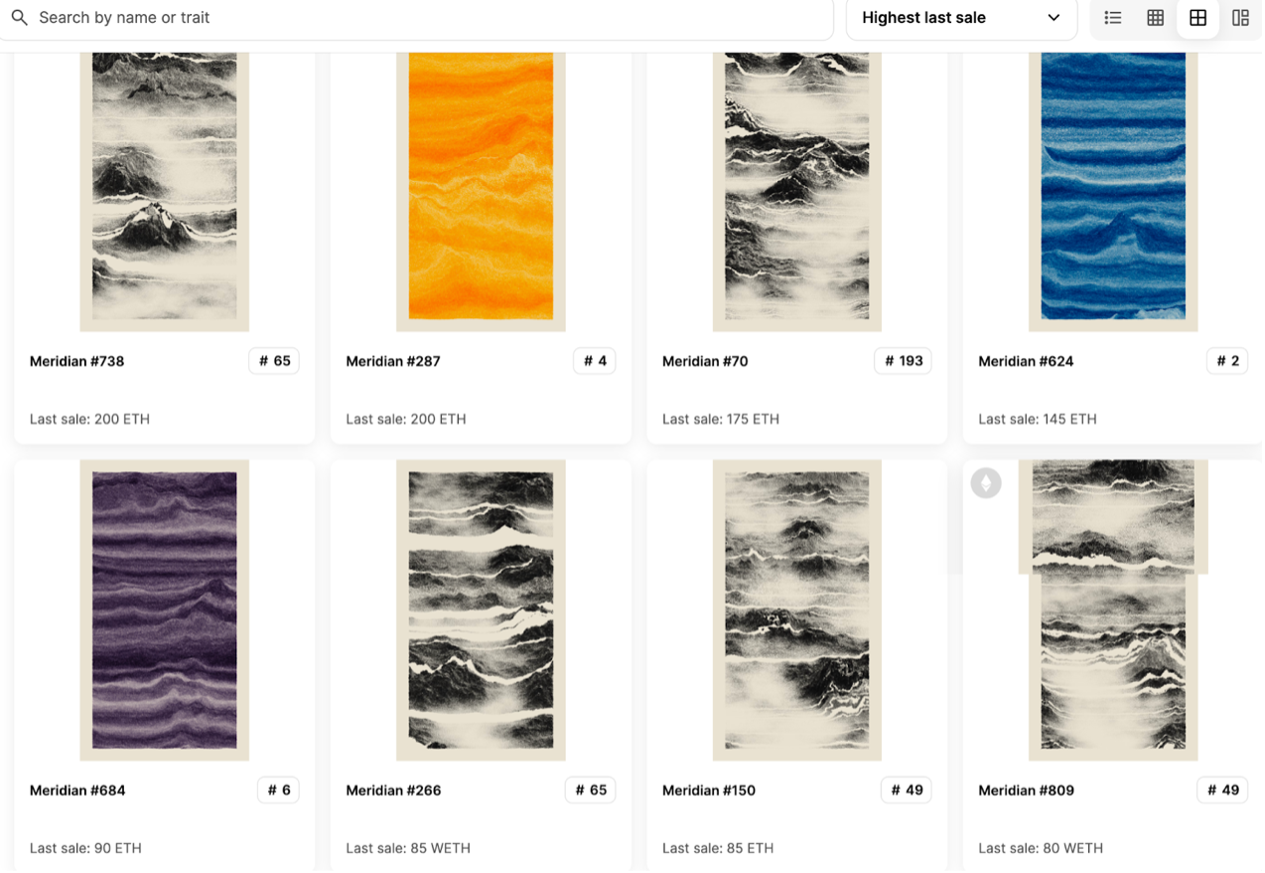
The success of "Meridian" is attributed to its exceptional diversity. Matt Deslauriers incorporated two main elements of diversity in the features: Palette and Style, each offering over 20 choices. Curator Shaun speculated that "Meridian" might have initially been conceived as a 400 edition project but was expanded to 1000 for various reasons, a change that likely contributed to its success. This illustrates the crucial role of excellent diversity in the success of generative landscape artworks.
Another notable generative art piece depicting landscapes in Web3 is "Garden, Monoliths" by zancan, released on the Tezos chain via fxhash in December 2021. With only 256 editions, the high unit price of "Garden, Monoliths" is particularly rare for the more accessible Tezos platform, with the highest sale price reaching 75,000 XTZ and the second-highest at 44,000 XTZ.
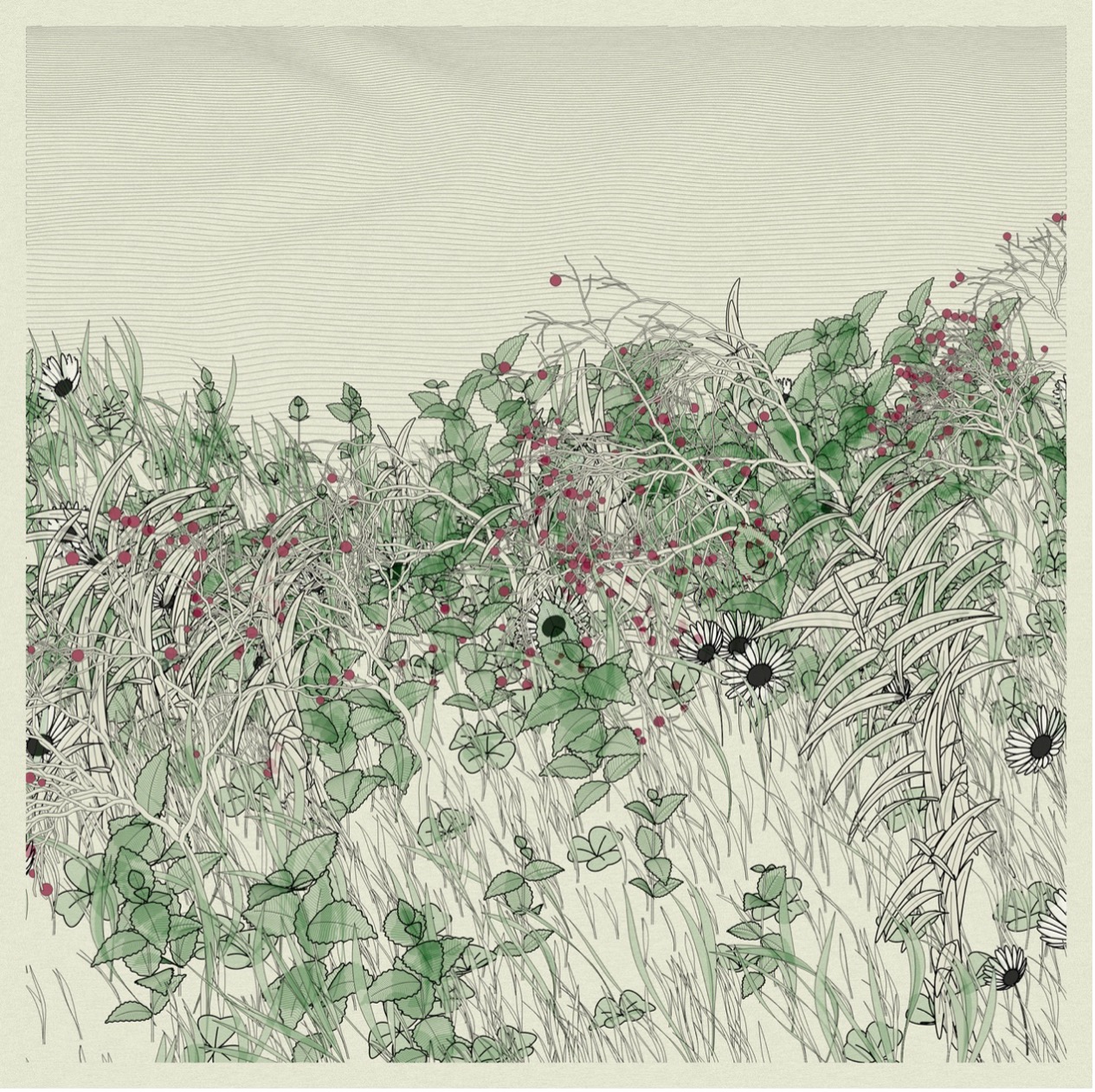
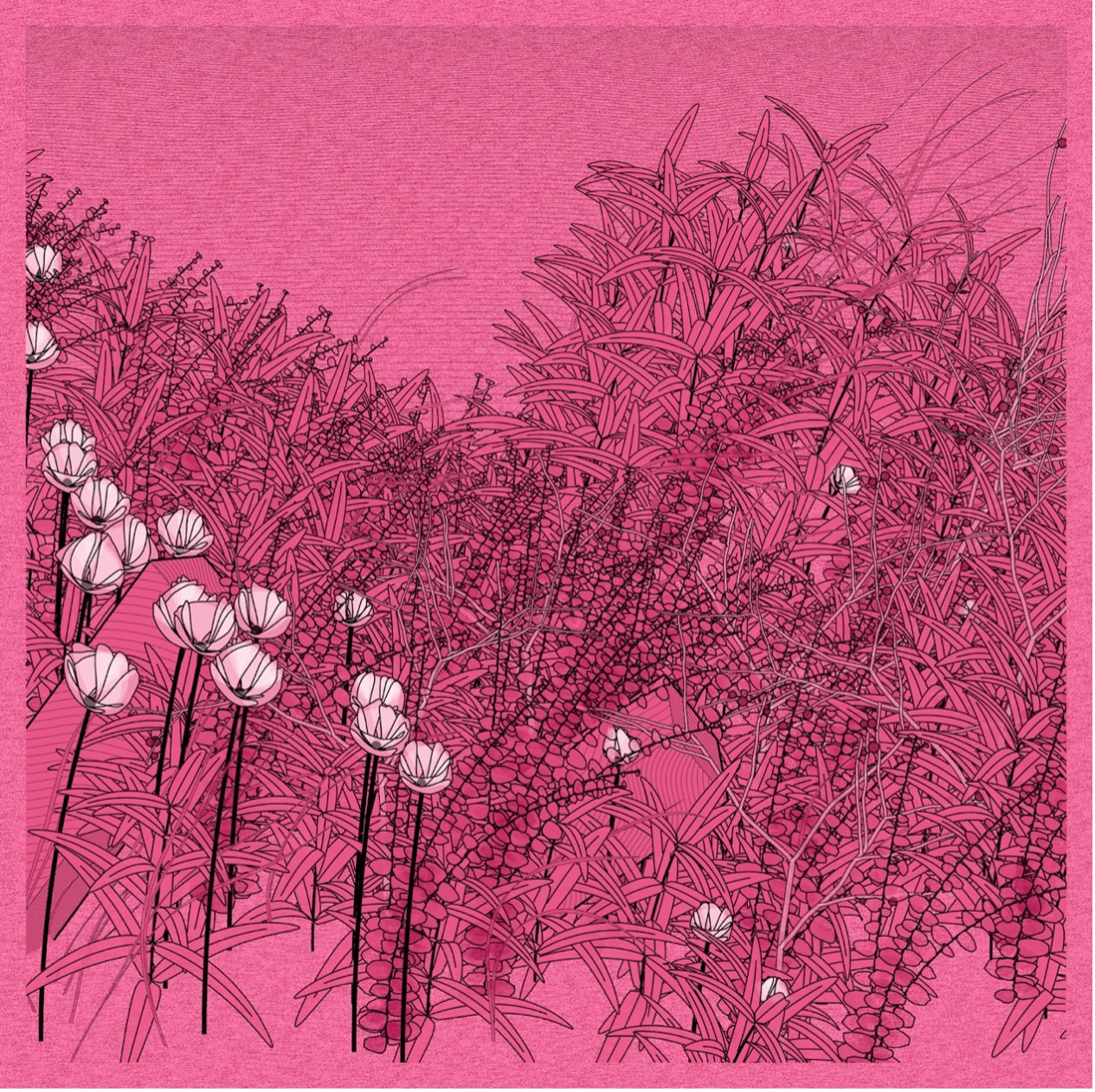
With the success of "Garden, Monoliths," an increasing number of emerging generative artists are exploring this style, leveraging various algorithms designed for creating natural scenes. Noise algorithms and random number generators effectively simulate terrain formation and the placement of wilderness, vegetation, and plant growth. However, zancan's followers have not surpassed him; his works, referred to as representational abstract art, require extensive coding to generate diverse properties and features, akin to the meticulous style of Chinese Gongbi painting, demanding patience and skill.
During this period, some artists have made notable attempts. For instance, in early 2023, Nat Sarkissian released "Eucalyptus and Sagebrush," a distinctive work because of its algorithmic complexity and visual representation.
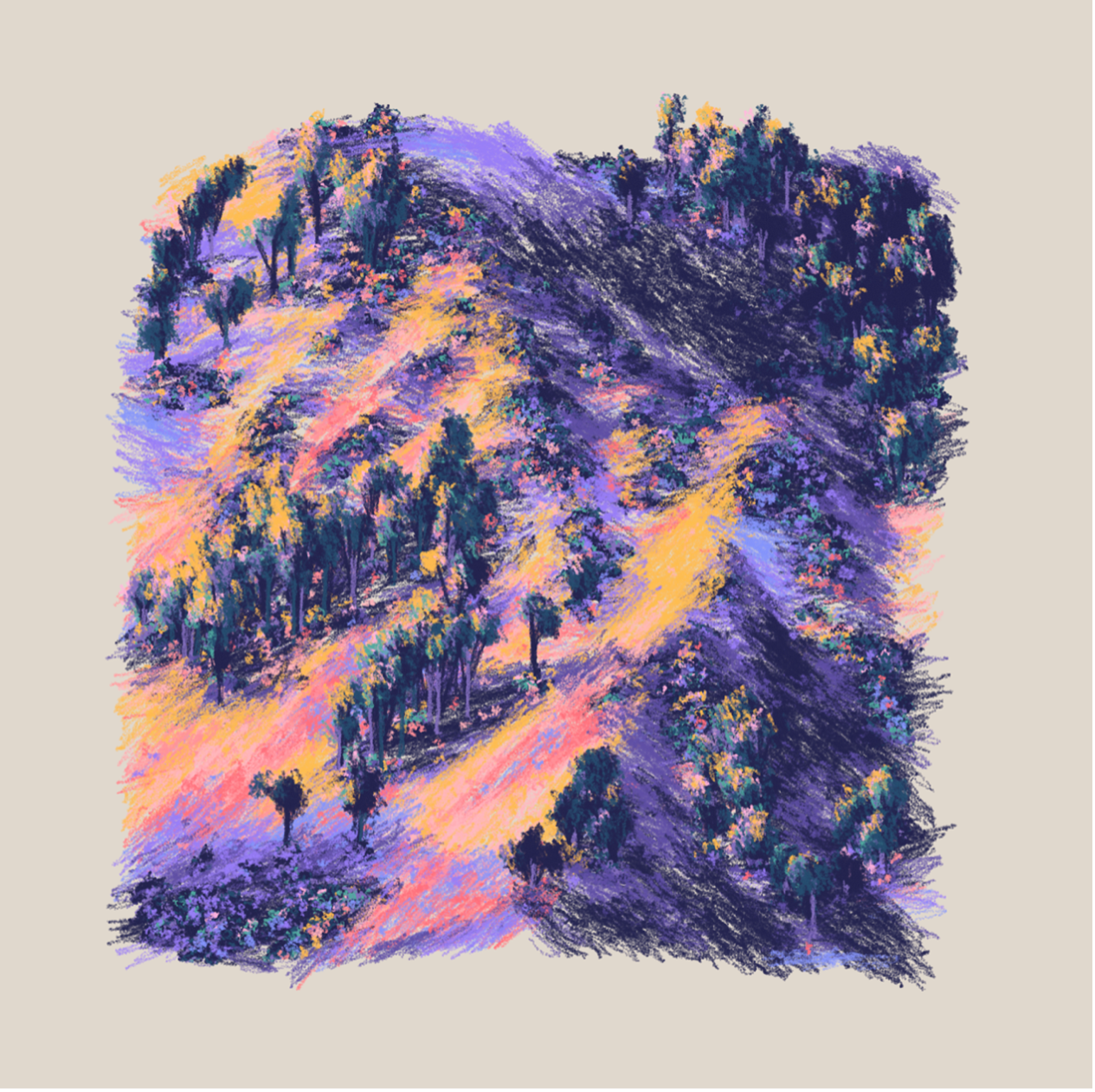
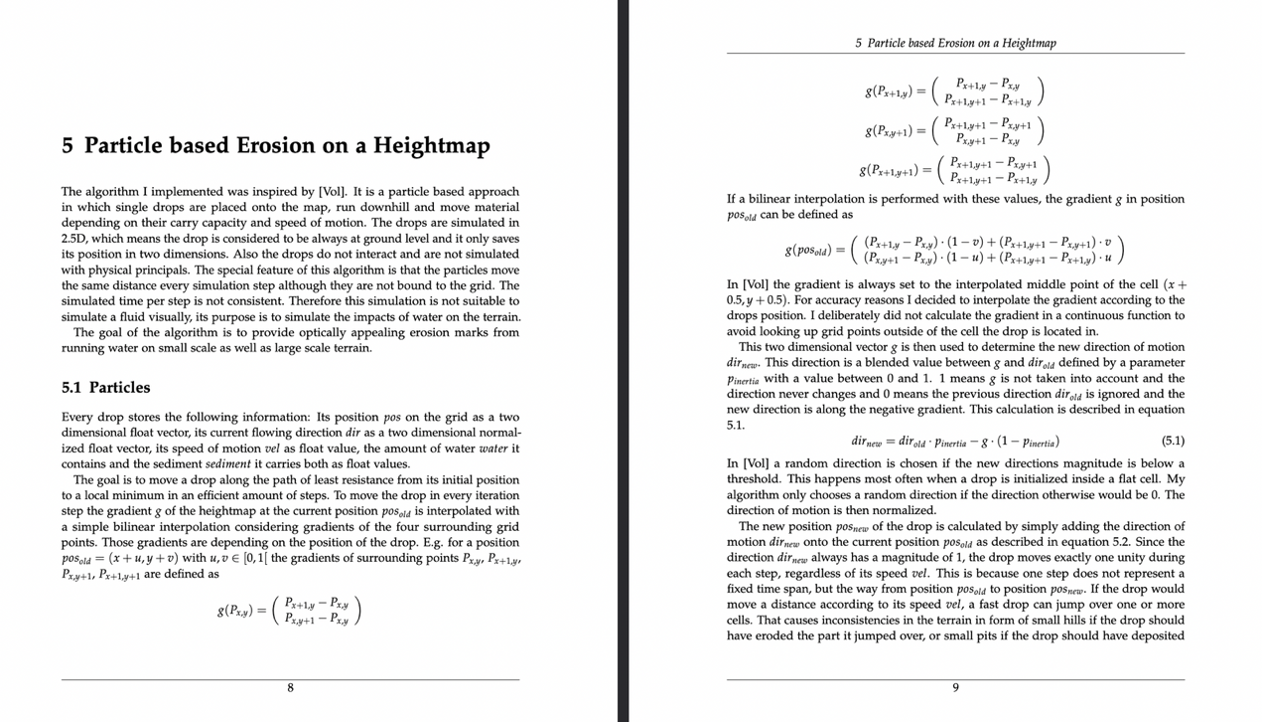
Nat successfully implemented a comprehensive hydraulic erosion algorithm for mountain terrain generation, a task so complex that even top-tier 3A game development teams are gradually adopting it. Yet, Nat accomplished this single-handedly, adding an artistic touch. This technical feat is not trivial, showcasing the complexity of the algorithms involved.
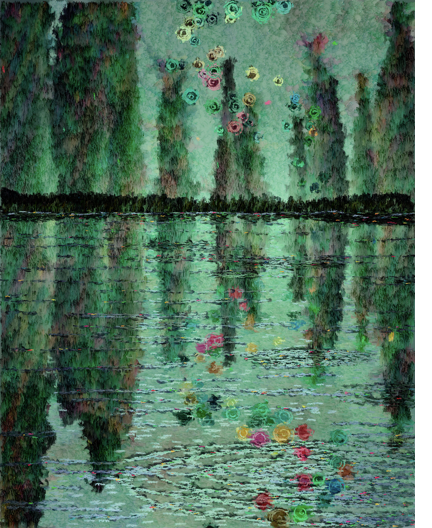
Furthermore, Nat enhanced the artwork with dynamic lighting and crayon-like brush effects, elevating the overall finish. Consequently, even with a Dutch auction mint price ranging from 750 XTZ to 450 XTZ, sales were swiftly completed. The year 2023 marked a bear market for cryptocurrencies, with Tezos prices declining. Many artists formerly active on fxhash shifted to Verse, an ETH-based curation platform known for its professionalism. On Verse, artists like William Mapan created remarkable works, including Matt Perkins' "Lake Festival," a highly successful series. Unfortunately, this series was released during a cryptocurrency downturn, making it relatively unknown beyond the most dedicated generative art collectors.
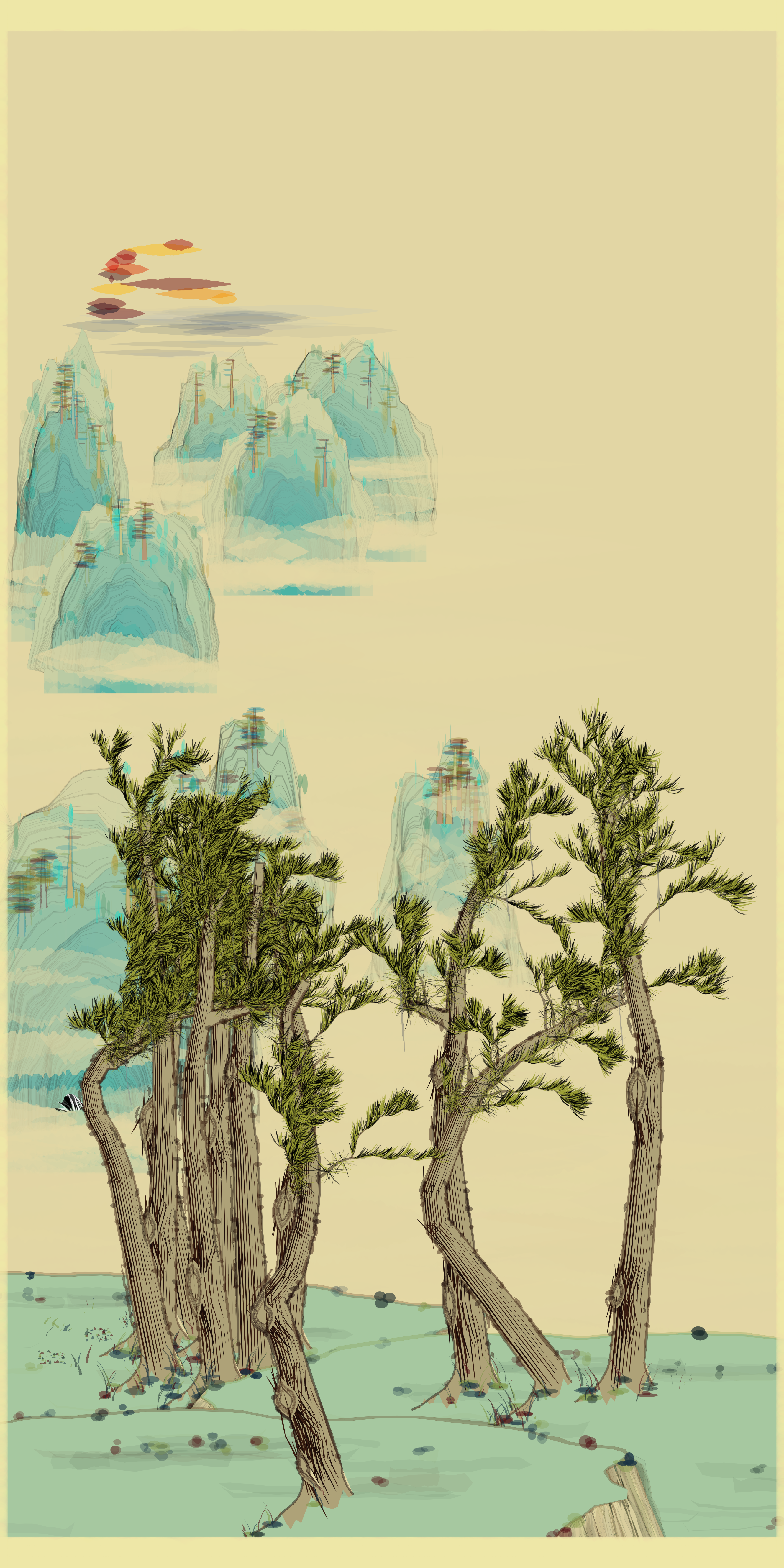
Keen observers may have noticed that in the current Web3 generative art landscape, explorations in generative landscape painting often draw inspiration from Western classical painting and modern design, with a noticeable absence of mature Eastern styles. Yet, Chinese landscape painting has always been one of the most culturally symbolic and philosophically profound forms of landscape painting in human art history. As a pinnacle of traditional Chinese painting, landscape painting holds a pivotal position in the art history of China and the world, celebrated for its composition, aesthetics, and philosophical implications. The challenge lies in the complexity of translating the style of Chinese landscape painting into computer graphics, a daunting task that positions it as a gem within generative art. This high technical barrier deters most generative artists, and the stringent demands of Chinese aesthetics and painting techniques make artists capable of navigating this field exceedingly rare. Therefore, it's an honor to introduce Random Combo's work on the Genify platform, marking the first Chinese landscape generative art piece on the BTC chain. This piece stands out as a significant achievement in the algorithmic generation of Chinese painting since 2017 and represents the essence of Chinese aesthetics in the Web3 world. With Random Combo's pioneering presence on both the BTC and TEZ chains, "Song" is poised to become one of the most important artworks in the Web3 world.
Conclusion
Today, we've briefly revisited generative landscape painting. In this domain, the artists mentioned have set exemplary standards. However, this is merely a starting point, not an endpoint. We believe the most thrilling chapters in this field are just beginning to unfold.