2024-02-25
Random Combo—A Web3 Pioneer Abstracting Chinese Aesthetics Through Mathematical Algorithms
Random Combo, a computational physics PhD and generative artist based in Singapore, ventured into the blockchain domain in 2021. He began exploring the expression of Chinese paintings within the realm of generative art.
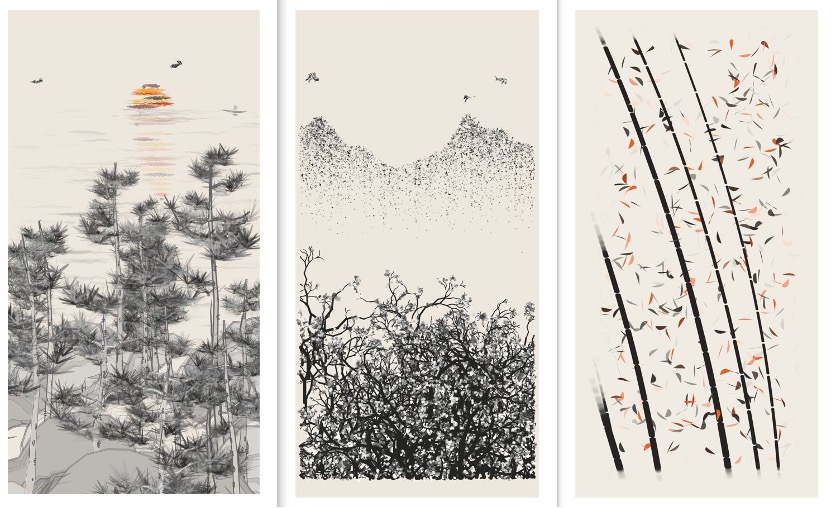
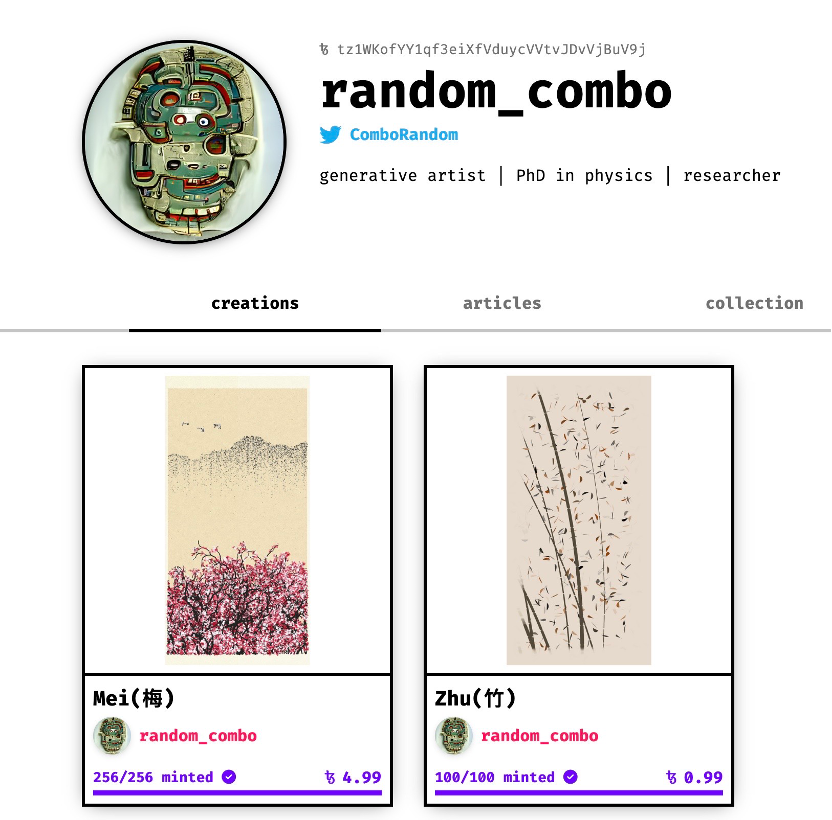
Random Combo, a computational physics PhD and generative artist based in Singapore, ventured into the blockchain domain in 2021. He began exploring the expression of Chinese paintings within the realm of generative art. That same year, he released his early works "Zhu" and "Mei" on the Fxhash platform, deeply influenced by Eastern aesthetics. These works made him one of the first artists to tokenize algorithmically generated Chinese paintings, quickly rising to popularity as one of the most celebrated Chinese generative artists on Fxhash.
Random Combo's artistic philosophy is rooted in a rational perspective, abstracting and distilling the sensual expressions found in traditional Chinese aesthetics through mathematical algorithms to create generative art pieces embodying the core paradigms of Chinese aesthetics. Essentially, this approach represents a deconstruction and a re-creation of aesthetic sensibility from a scientific rationale. This reconciliation of rationality and sensibility, seemingly contradictory, is quite typical in the field of algorithmic generative art. As physicist Lee Cheng-dao once said:
"The commonality between art and science lies in human creativity; their pursuit is the universality of truth."
Mathematics, dubbed the "queen of all sciences," explores concepts like quantity, structure, change, space, and information. Art, on the other hand, is a unique way humans comprehend the world through emotions and imagination, reimagining reality and expressing emotional ideals through aesthetic creative activities. In essence, while mathematics inducts universal laws from the objective world, art summarizes universality from perceptual consciousness. However, since human perception originates from observing the objective world, art also autonomously maps the objective reality, rationality. From this perspective, generative art retraces the formation process of perception through mathematical methods, reflecting Random Combo's philosophical musings as a math expert.
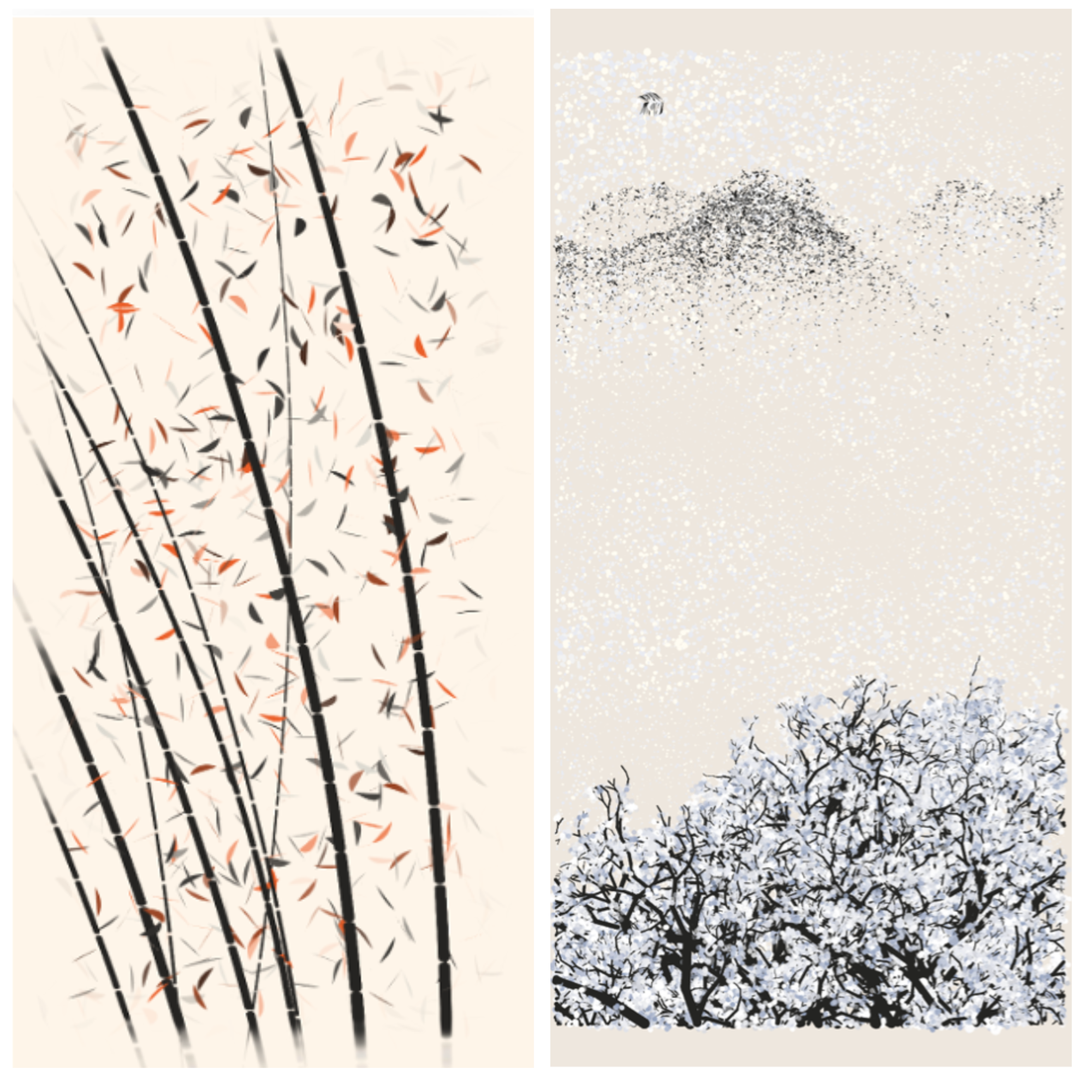
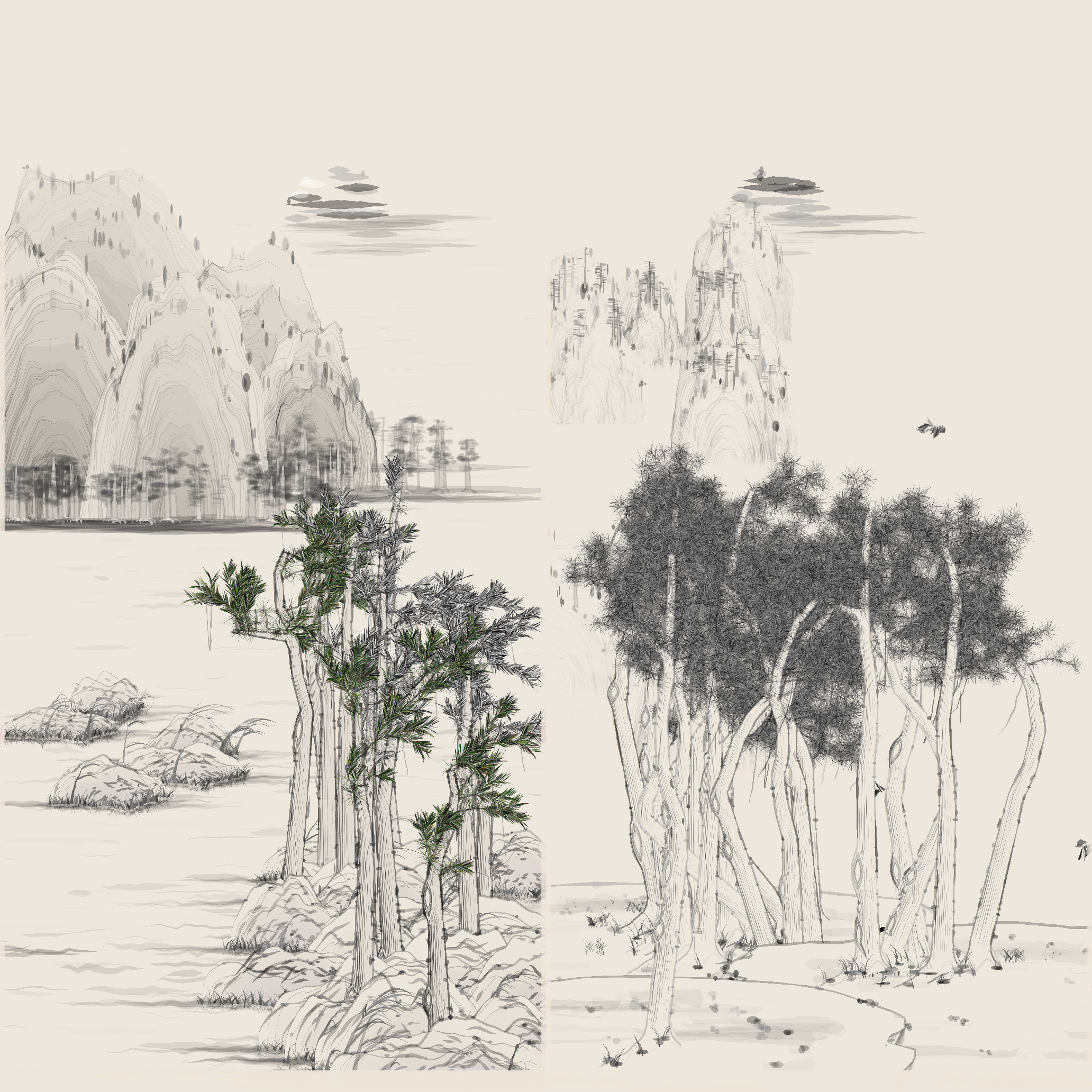
Random Combo's artistic journey has led him to a pinnacle in computer graphics: Chinese ink painting. Style transfer, a classic problem in computer imaging, has seen numerous works in oil painting and cartoon styles but few in Chinese ink painting due to its significant deformation and challenging aesthetic principles, slowing algorithmic generative research in this direction. Proud of his solid mathematical foundation and keen observation of Chinese ink painting techniques, Random Combo has created several representative works. For instance, his earlier pieces "Zhu" and "Mei," inspired by common themes in traditional Chinese bird-and-flower paintings—bamboo and plum blossoms—abstract their essence through simple yet ingenious mathematical algorithms. The plum blossoms' branches are depicted using recursive algorithms, progressively representing their rugged beauty, while the bamboo leaves are illustrated with a flow field to convey their graceful dynamism. The birds in "Mei" are also generated with a flow field, underlying a common mathematical logic between the two works. This approach is further demonstrated in his Genify project "Song," where varied forms of mountains and rocks share a consistent mathematical logic, adjustable through parameters to produce complex and diverse effects. This balance of diversity and stability benefits from Random Combo's abstract understanding and mastery of the core paradigms in Chinese painting aesthetics, allowing for a presentation through advanced mathematical and computing techniques that ensures each of the 1000 outputs remains aesthetically pleasing and unique.
Random Combo's third series, "Song," which is an algorithmically generated tribute to the significant evolution from realism to abstraction in Chinese painting during the Song to Yuan dynasties, a period that saw the emergence of literati painting. This shift is a critical juncture where traditional Chinese landscapes, once rooted in realism, began embracing abstract humanistic expressions. If Fan Kuan's "Travelers Among Mountains and Streams" epitomizes the pinnacle of Song dynasty's realistic landscape painting, the Yuan dynasty marked a gradual move towards abstraction, with painters transitioning into scholars and intellectuals, like Ni Zan. This evolution birthed a unique literati painting style, influencing Chinese aesthetics for over a thousand years. "Song" by Random Combo delves into this transformative era, capturing both the intricate style of representational works and the ethereal spirit of ancient Chinese intellectuals, thus highlighting a pivotal moment when ancient Chinese landscapes shifted from the concrete to the abstract.
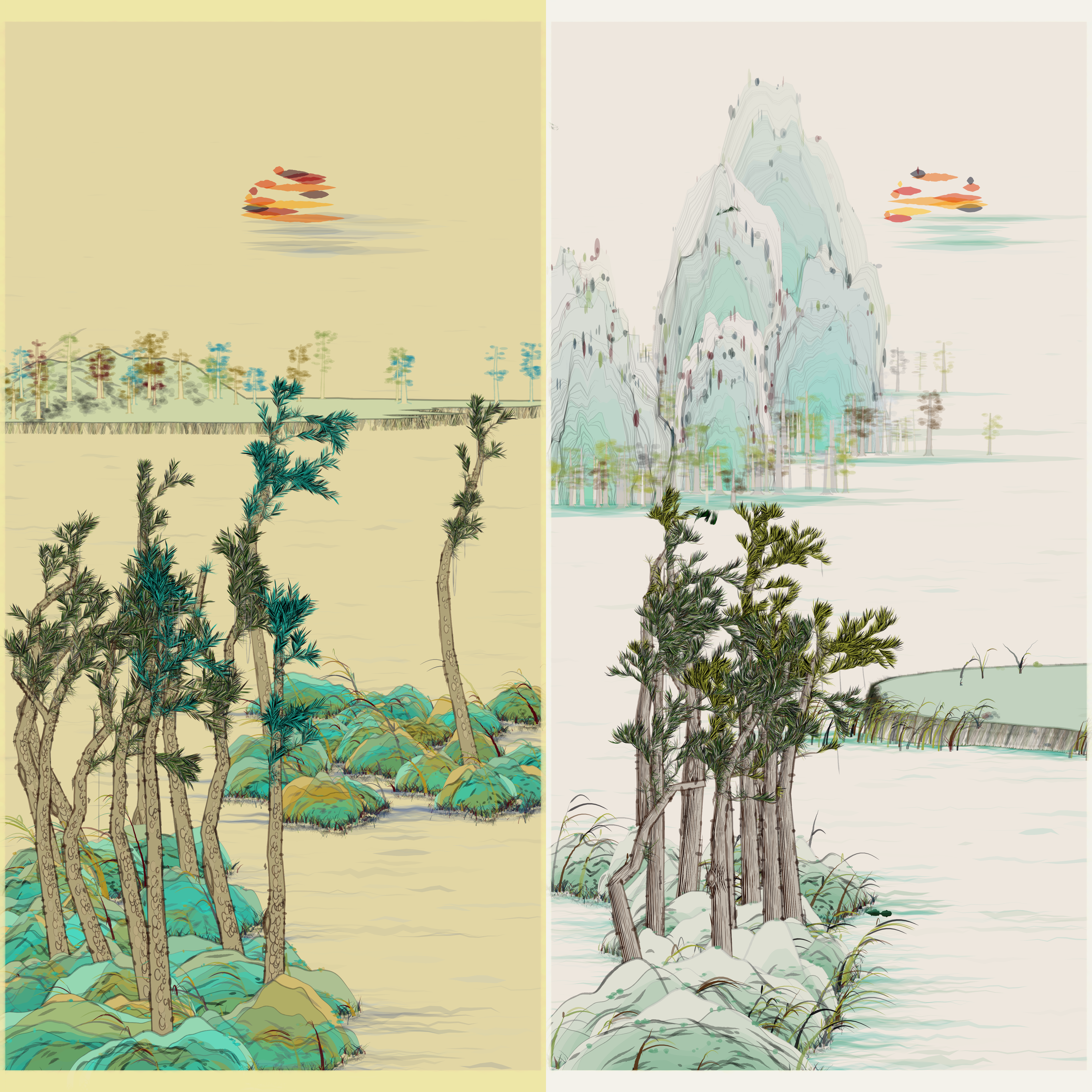
In my view, the value assessment system for technology-based art should be constructed from both engineering and art history perspectives. As one of the earliest artists on the blockchain to deconstruct Chinese aesthetics from a mathematical standpoint and create Chinese-styled generative art, coupled with his constructive contributions to generative Chinese ink painting through innovative algorithms, Random Combo's historical positioning as a representative figure in Web3's generative Chinese aesthetic works is indisputable. His seminal work, "Song," will also become the first algorithmically generated inscription project on the BTC chain to interpret Chinese aesthetics, not only entering the annals of BTC inscription development history but also marking a milestone in the integration of Chinese aesthetics with blockchain and generative art.